The Dopamine Management Framework: A Rationalist’s Guide to Balancing Reward, Focus, and Drive

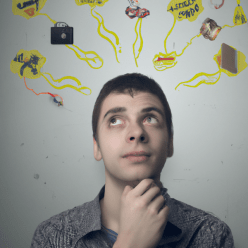
Modern knowledge‑workers and rationalists live in a gilded cage of stimulation. Our smartphones ping. Social apps lure. Productivity tools promise efficiency but bring micro‑interruptions. It all feels like progress — until it doesn’t. Until motivation runs dry. Attention flattens. Dissatisfaction sets in.

Yes, you already know that the neurotransmitter Dopamine is often called the brain’s “reward” signal. But what if you treated your dopaminergic system like budget, or like time—with strategy, measurement, and purpose? Not to eliminate pleasure (this isn’t asceticism) — but to reclaim control over what motivates you, and how you pursue meaningful goals.

MentalModels

In this post I’ll introduce a practical four‑step framework: Track → Taper → Tune → Train. One by one we’ll unpack how these phases map to your environment, habits, and long‑term motivation architecture.


Why This Matters

Technology has turned dopamine hijacking into default mode.
When you’re not just distracted — when your reward system is distorted — you may see:

  • shorter attention spans

  • effort‑aversion to sustained work

  • a shift toward quick‑hit gratification instead of the rich, long‑term satisfaction of building something meaningful
    And for rationalists — who prize clarity, deep work, coherent motivation — this is more than nuisance. It becomes structural.

In neuroscience terms, dopamine isn’t simply about pleasure. It plays a key role in motivating actions and associating them with value. PNAS+2PMC+2 And when we flood that system with high‑intensity, low‑effort reward signals, we degrade our sensitivity to more subtle, delayed rewards. Penn LPS Online+1

So: the problem isn’t dopamine. The problem is unmanaged dopamine.


The Framework: Track → Taper → Tune → Train

1. Track – Map Your Dopamine Environment

Key Idea: You can’t manage what you don’t measure.

What to do:

  • Identify your “dopamine hotspots”: e.g., social media scrolls, email pings, news bingeing, caffeine hits, instant feedback tools.

  • Categorize each by intensity (for example: doom‑scrolling social feed = high; reading a print journal = medium; writing code without interruption = low but delayed).

  • Track “dopamine crashes” — times when your motivation, energy or focus drops sharply: what preceded them? A 10‑minute feed of pointless info? A high‑caffeine spike?

  • Use a “dopamine log” for ~5 days. Each time you get a strong hit or crash, note: time, source, duration, effect on your focus/mood.

Why this works:
Neuroscience shows dopamine’s role in signalling future reward and motivating effort. PMC+1 If your baseline is chaotic — with bursts and dips coming from external stimuli — your system becomes reactive instead of intentional.

Pro tip: Use a very simple spreadsheet or notebook. Column for “stimulus,” “duration,” “felt effect,” “focus after”. Try to track before and after (e.g., “30 min Instagram → motivation drop from 8→3”).


2. Taper – Reduce Baseline Dopamine Stimuli

Key Idea: A high baseline of stimulation dulls your sensitivity to more meaningful rewards — and makes focused work feel intolerable.

Actions:

  • Pick one high‑stimulation habit to taper (don’t go full monk‑mode yet).

    • Example: replace Instagram scrolling with reading a curated newsletter.

    • Replace energy drinks with green tea in the afternoon.

  • Introduce “dopamine fasting” blocks: e.g., one hour per day with no screens, no background noise, no caffeine.

  • Avoid the pitfall: icy abstinence. The goal is balance, not deprivation.

Why this matters:
The brain’s reward pathways are designed for survival‑based stimuli, not for an endless stream of instant thrills. Artificially high dopaminergic surges (via apps, notifications, etc.) produce adaptation and tolerance. The system flattens. Penn LPS Online+1 When your brain expects high‑intensity reward, the normal things (writing, thinking, reflecting) feel dull.

Implementation tip: Schedule your tapering. For example: disable social apps for 30 minutes after waking, replace that slot with reading or journaling. After two weeks, increase to 45 minutes.


3. Tune – Align Dopamine with Your Goals

Key Idea: You can train your brain to associate dopamine with meaningful effort, not just passive inputs.

Actions:

  • Use temptation bundling: attach a small reward to focused work (e.g., write for 30 minutes and then enjoy an espresso or a favorite podcast).

  • Redefine “wins”: instead of just “I shipped feature X” (outcome), track process‑goals: “I wrote 300 words”, “I did a 50‑minute uninterrupted session”.

  • Break larger tasks into small units you can complete (write 100 words instead of “write article”). Each completion triggers a minor dopamine hit.

  • Create a “dopamine calendar”: log your wins (process wins), and visually see consistency over intensity.

Why this works:
Dopamine is deeply tied into incentive salience — the “wanting” of a reward — and prediction errors in reward systems. Wikipedia+1 If you signal to the brain that the processes you value are themselves rewarding, you shift your internal reward map away from only “instant high” to “meaningful engagement”.

Tip: Use a simple app or notebook: every time you finish a mini‑task, mark a win. Then allow yourself the small reward. Over time, you’ll build momentum.


4. Train – Build a Resilient Motivation System

Key Idea: Sustained dopamine stability requires training for delayed rewards, boredom tolerance — the opposite of constant high‑arousal stimulation.

Actions:

  • Practice boredom training: spend 10 minutes a day doing nothing (no phone, no music, no output). Just sit, think, breathe.

  • Introduce deep‑focus blocks: schedule 25‑90 minute sessions where you do high‑value work with minimal stimulation (no notifications, no tab switching).

  • Use dopamine‑contrast days: alternate between one “deep focus” day and one “leisure‑heavy” day to re‑sensitise your reward system.

  • Mindset shift: view boredom not as failure, but as a muscle you’re building.

Why this matters:
Our neurobiology thrives on novelty, yet adapts quickly. Without training in low‑arousal states and delayed gratification, your motivation becomes brittle. The brain shifts toward short‑term cues. Neuroscience has shown that dopamine dysregulation often involves reduced ability to tolerate low stimulation or delayed reward. Penn LPS Online

Implementation tip: Start small. Two times a week schedule a 20‑minute deep‑focus block. Also schedule two separate 10‑minute “nothing” blocks. Build from there.


Real‑Life Example: Dopamine Rewiring in Practice

Here’s a profile: A freelance developer found that by mid‑afternoon, her energy and motivation always crashed. She logged her day and discovered the pattern: morning caffeine + Twitter + Discord chat = dopamine spike early. Then the crash happened by 2 PM.

She applied the framework:

  • Track: She logged each social/communication/caffeine event, noted effects on focus.

  • Taper: Reduced caffeine, postponed social scrolling to after 5 PM. Introduced a 15‑minute walk + journaling break instead of Twitter at lunch.

  • Tune: She broke her workday into 30‑minute coding sprints, each followed by a small reward (a glass of water + 2‑minute stretch). She logged each sprint as a “win”.

  • Train: Added a daily 20‑minute “nothing” block (no tech) and scheduled two deep focus blocks of 60 minutes each.

Results after ~10 days: Her uninterrupted focus blocks grew by ~45 minutes; she described herself as “more driven but less scattered.”


Metrics to Track

To see if this is working for you, here are metrics you might adopt:

  • Focus duration without switching: how long can you work before you switch tasks or get distracted?

  • Number of process‑wins logged per day: the small completed units.

  • Perceived energy levels (AM vs. PM): rate from 1–10 each day.

  • Mood ratings before and after key dopamine events: note spikes and crashes.

Track weekly. Look for improvement in focus duration, fewer mid‑day crashes, and a more stable mood curve.


Next Steps

Here’s a roadmap:

  1. Audit your top 5 dopamine sources (what gives you quick hits, what gives you slow/meaningful reward).

  2. Pick one high‑stimulation habit to taper this week.

  3. Set up a simple win‑log for process goals starting today.

  4. Introduce a 5‑minute boredom session each day (just 5 minutes is fine).

  5. At the end of the week, reassess: What improved? What got worse? Adjust.

Remember: dopamine management is iterative. It’s not about perfection or asceticism — it’s about designing your internal reward system so you drive it, instead of being driven by it.


Closing Thought

Managing dopamine isn’t about restriction. It’s about deliberate design. It’s about aligning your reward architecture with your values, your goals, your energy rhythms. It’s about reclaiming autonomy.

When the world’s stimuli are engineered to hijack your motivation, the only honest defense is a framework: one that lets you track what’s actually happening, taper impulsive rewards, tune process‑based wins, and train your system for deep, sustained focus.

If you’re someone who cares about clarity, meaning, and control—this isn’t optional. It’s foundational.

Here’s to managing our dopamine, instead of letting it manage us.


* AI tools were used as a research assistant for this content, but human moderation and writing are also included. The included images are AI-generated.

The Dopamine Management Framework: A Rationalist’s Guide to Balancing Reward, Focus, and Drive

Modern knowledge‑workers and rationalists live in a gilded cage of stimulation. Our smartphones ping. Social apps lure. Productivity tools promise efficiency but bring micro‑interruptions. It all feels like progress — until it doesn’t. Until motivation runs dry. Attention flattens. Dissatisfaction sets in.

Yes, you already know that the neurotransmitter Dopamine is often called the brain’s “reward” signal. But what if you treated your dopaminergic system like budget, or like time—with strategy, measurement, and purpose? Not to eliminate pleasure (this isn’t asceticism) — but to reclaim control over what motivates you, and how you pursue meaningful goals.

MentalModels

In this post I’ll introduce a practical four‑step framework: Track → Taper → Tune → Train. One by one we’ll unpack how these phases map to your environment, habits, and long‑term motivation architecture.


Why This Matters

Technology has turned dopamine hijacking into default mode.
When you’re not just distracted — when your reward system is distorted — you may see:

  • shorter attention spans

  • effort‑aversion to sustained work

  • a shift toward quick‑hit gratification instead of the rich, long‑term satisfaction of building something meaningful
    And for rationalists — who prize clarity, deep work, coherent motivation — this is more than nuisance. It becomes structural.

In neuroscience terms, dopamine isn’t simply about pleasure. It plays a key role in motivating actions and associating them with value. PNAS+2PMC+2 And when we flood that system with high‑intensity, low‑effort reward signals, we degrade our sensitivity to more subtle, delayed rewards. Penn LPS Online+1

So: the problem isn’t dopamine. The problem is unmanaged dopamine.


The Framework: Track → Taper → Tune → Train

1. Track – Map Your Dopamine Environment

Key Idea: You can’t manage what you don’t measure.

What to do:

  • Identify your “dopamine hotspots”: e.g., social media scrolls, email pings, news bingeing, caffeine hits, instant feedback tools.

  • Categorize each by intensity (for example: doom‑scrolling social feed = high; reading a print journal = medium; writing code without interruption = low but delayed).

  • Track “dopamine crashes” — times when your motivation, energy or focus drops sharply: what preceded them? A 10‑minute feed of pointless info? A high‑caffeine spike?

  • Use a “dopamine log” for ~5 days. Each time you get a strong hit or crash, note: time, source, duration, effect on your focus/mood.

Why this works:
Neuroscience shows dopamine’s role in signalling future reward and motivating effort. PMC+1 If your baseline is chaotic — with bursts and dips coming from external stimuli — your system becomes reactive instead of intentional.

Pro tip: Use a very simple spreadsheet or notebook. Column for “stimulus,” “duration,” “felt effect,” “focus after”. Try to track before and after (e.g., “30 min Instagram → motivation drop from 8→3”).


2. Taper – Reduce Baseline Dopamine Stimuli

Key Idea: A high baseline of stimulation dulls your sensitivity to more meaningful rewards — and makes focused work feel intolerable.

Actions:

  • Pick one high‑stimulation habit to taper (don’t go full monk‑mode yet).

    • Example: replace Instagram scrolling with reading a curated newsletter.

    • Replace energy drinks with green tea in the afternoon.

  • Introduce “dopamine fasting” blocks: e.g., one hour per day with no screens, no background noise, no caffeine.

  • Avoid the pitfall: icy abstinence. The goal is balance, not deprivation.

Why this matters:
The brain’s reward pathways are designed for survival‑based stimuli, not for an endless stream of instant thrills. Artificially high dopaminergic surges (via apps, notifications, etc.) produce adaptation and tolerance. The system flattens. Penn LPS Online+1 When your brain expects high‑intensity reward, the normal things (writing, thinking, reflecting) feel dull.

Implementation tip: Schedule your tapering. For example: disable social apps for 30 minutes after waking, replace that slot with reading or journaling. After two weeks, increase to 45 minutes.


3. Tune – Align Dopamine with Your Goals

Key Idea: You can train your brain to associate dopamine with meaningful effort, not just passive inputs.

Actions:

  • Use temptation bundling: attach a small reward to focused work (e.g., write for 30 minutes and then enjoy an espresso or a favorite podcast).

  • Redefine “wins”: instead of just “I shipped feature X” (outcome), track process‑goals: “I wrote 300 words”, “I did a 50‑minute uninterrupted session”.

  • Break larger tasks into small units you can complete (write 100 words instead of “write article”). Each completion triggers a minor dopamine hit.

  • Create a “dopamine calendar”: log your wins (process wins), and visually see consistency over intensity.

Why this works:
Dopamine is deeply tied into incentive salience — the “wanting” of a reward — and prediction errors in reward systems. Wikipedia+1 If you signal to the brain that the processes you value are themselves rewarding, you shift your internal reward map away from only “instant high” to “meaningful engagement”.

Tip: Use a simple app or notebook: every time you finish a mini‑task, mark a win. Then allow yourself the small reward. Over time, you’ll build momentum.


4. Train – Build a Resilient Motivation System

Key Idea: Sustained dopamine stability requires training for delayed rewards, boredom tolerance — the opposite of constant high‑arousal stimulation.

Actions:

  • Practice boredom training: spend 10 minutes a day doing nothing (no phone, no music, no output). Just sit, think, breathe.

  • Introduce deep‑focus blocks: schedule 25‑90 minute sessions where you do high‑value work with minimal stimulation (no notifications, no tab switching).

  • Use dopamine‑contrast days: alternate between one “deep focus” day and one “leisure‑heavy” day to re‑sensitise your reward system.

  • Mindset shift: view boredom not as failure, but as a muscle you’re building.

Why this matters:
Our neurobiology thrives on novelty, yet adapts quickly. Without training in low‑arousal states and delayed gratification, your motivation becomes brittle. The brain shifts toward short‑term cues. Neuroscience has shown that dopamine dysregulation often involves reduced ability to tolerate low stimulation or delayed reward. Penn LPS Online

Implementation tip: Start small. Two times a week schedule a 20‑minute deep‑focus block. Also schedule two separate 10‑minute “nothing” blocks. Build from there.


Real‑Life Example: Dopamine Rewiring in Practice

Here’s a profile: A freelance developer found that by mid‑afternoon, her energy and motivation always crashed. She logged her day and discovered the pattern: morning caffeine + Twitter + Discord chat = dopamine spike early. Then the crash happened by 2 PM.

She applied the framework:

  • Track: She logged each social/communication/caffeine event, noted effects on focus.

  • Taper: Reduced caffeine, postponed social scrolling to after 5 PM. Introduced a 15‑minute walk + journaling break instead of Twitter at lunch.

  • Tune: She broke her workday into 30‑minute coding sprints, each followed by a small reward (a glass of water + 2‑minute stretch). She logged each sprint as a “win”.

  • Train: Added a daily 20‑minute “nothing” block (no tech) and scheduled two deep focus blocks of 60 minutes each.

Results after ~10 days: Her uninterrupted focus blocks grew by ~45 minutes; she described herself as “more driven but less scattered.”


Metrics to Track

To see if this is working for you, here are metrics you might adopt:

  • Focus duration without switching: how long can you work before you switch tasks or get distracted?

  • Number of process‑wins logged per day: the small completed units.

  • Perceived energy levels (AM vs. PM): rate from 1–10 each day.

  • Mood ratings before and after key dopamine events: note spikes and crashes.

Track weekly. Look for improvement in focus duration, fewer mid‑day crashes, and a more stable mood curve.


Next Steps

Here’s a roadmap:

  1. Audit your top 5 dopamine sources (what gives you quick hits, what gives you slow/meaningful reward).

  2. Pick one high‑stimulation habit to taper this week.

  3. Set up a simple win‑log for process goals starting today.

  4. Introduce a 5‑minute boredom session each day (just 5 minutes is fine).

  5. At the end of the week, reassess: What improved? What got worse? Adjust.

Remember: dopamine management is iterative. It’s not about perfection or asceticism — it’s about designing your internal reward system so you drive it, instead of being driven by it.


Closing Thought

Managing dopamine isn’t about restriction. It’s about deliberate design. It’s about aligning your reward architecture with your values, your goals, your energy rhythms. It’s about reclaiming autonomy.

When the world’s stimuli are engineered to hijack your motivation, the only honest defense is a framework: one that lets you track what’s actually happening, taper impulsive rewards, tune process‑based wins, and train your system for deep, sustained focus.

If you’re someone who cares about clarity, meaning, and control—this isn’t optional. It’s foundational.

Here’s to managing our dopamine, instead of letting it manage us.


* AI tools were used as a research assistant for this content, but human moderation and writing are also included. The included images are AI-generated.

The Dopamine Management Framework: A Rationalist’s Guide to Balancing Reward, Focus, and Drive

Modern knowledge‑workers and rationalists live in a gilded cage of stimulation. Our smartphones ping. Social apps lure. Productivity tools promise efficiency but bring micro‑interruptions. It all feels like progress — until it doesn’t. Until motivation runs dry. Attention flattens. Dissatisfaction sets in.

Yes, you already know that the neurotransmitter Dopamine is often called the brain’s “reward” signal. But what if you treated your dopaminergic system like budget, or like time—with strategy, measurement, and purpose? Not to eliminate pleasure (this isn’t asceticism) — but to reclaim control over what motivates you, and how you pursue meaningful goals.

MentalModels

In this post I’ll introduce a practical four‑step framework: Track → Taper → Tune → Train. One by one we’ll unpack how these phases map to your environment, habits, and long‑term motivation architecture.


Why This Matters

Technology has turned dopamine hijacking into default mode.
When you’re not just distracted — when your reward system is distorted — you may see:

  • shorter attention spans

  • effort‑aversion to sustained work

  • a shift toward quick‑hit gratification instead of the rich, long‑term satisfaction of building something meaningful
    And for rationalists — who prize clarity, deep work, coherent motivation — this is more than nuisance. It becomes structural.

In neuroscience terms, dopamine isn’t simply about pleasure. It plays a key role in motivating actions and associating them with value. PNAS+2PMC+2 And when we flood that system with high‑intensity, low‑effort reward signals, we degrade our sensitivity to more subtle, delayed rewards. Penn LPS Online+1

So: the problem isn’t dopamine. The problem is unmanaged dopamine.


The Framework: Track → Taper → Tune → Train

1. Track – Map Your Dopamine Environment

Key Idea: You can’t manage what you don’t measure.

What to do:

  • Identify your “dopamine hotspots”: e.g., social media scrolls, email pings, news bingeing, caffeine hits, instant feedback tools.

  • Categorize each by intensity (for example: doom‑scrolling social feed = high; reading a print journal = medium; writing code without interruption = low but delayed).

  • Track “dopamine crashes” — times when your motivation, energy or focus drops sharply: what preceded them? A 10‑minute feed of pointless info? A high‑caffeine spike?

  • Use a “dopamine log” for ~5 days. Each time you get a strong hit or crash, note: time, source, duration, effect on your focus/mood.

Why this works:
Neuroscience shows dopamine’s role in signalling future reward and motivating effort. PMC+1 If your baseline is chaotic — with bursts and dips coming from external stimuli — your system becomes reactive instead of intentional.

Pro tip: Use a very simple spreadsheet or notebook. Column for “stimulus,” “duration,” “felt effect,” “focus after”. Try to track before and after (e.g., “30 min Instagram → motivation drop from 8→3”).


2. Taper – Reduce Baseline Dopamine Stimuli

Key Idea: A high baseline of stimulation dulls your sensitivity to more meaningful rewards — and makes focused work feel intolerable.

Actions:

  • Pick one high‑stimulation habit to taper (don’t go full monk‑mode yet).

    • Example: replace Instagram scrolling with reading a curated newsletter.

    • Replace energy drinks with green tea in the afternoon.

  • Introduce “dopamine fasting” blocks: e.g., one hour per day with no screens, no background noise, no caffeine.

  • Avoid the pitfall: icy abstinence. The goal is balance, not deprivation.

Why this matters:
The brain’s reward pathways are designed for survival‑based stimuli, not for an endless stream of instant thrills. Artificially high dopaminergic surges (via apps, notifications, etc.) produce adaptation and tolerance. The system flattens. Penn LPS Online+1 When your brain expects high‑intensity reward, the normal things (writing, thinking, reflecting) feel dull.

Implementation tip: Schedule your tapering. For example: disable social apps for 30 minutes after waking, replace that slot with reading or journaling. After two weeks, increase to 45 minutes.


3. Tune – Align Dopamine with Your Goals

Key Idea: You can train your brain to associate dopamine with meaningful effort, not just passive inputs.

Actions:

  • Use temptation bundling: attach a small reward to focused work (e.g., write for 30 minutes and then enjoy an espresso or a favorite podcast).

  • Redefine “wins”: instead of just “I shipped feature X” (outcome), track process‑goals: “I wrote 300 words”, “I did a 50‑minute uninterrupted session”.

  • Break larger tasks into small units you can complete (write 100 words instead of “write article”). Each completion triggers a minor dopamine hit.

  • Create a “dopamine calendar”: log your wins (process wins), and visually see consistency over intensity.

Why this works:
Dopamine is deeply tied into incentive salience — the “wanting” of a reward — and prediction errors in reward systems. Wikipedia+1 If you signal to the brain that the processes you value are themselves rewarding, you shift your internal reward map away from only “instant high” to “meaningful engagement”.

Tip: Use a simple app or notebook: every time you finish a mini‑task, mark a win. Then allow yourself the small reward. Over time, you’ll build momentum.


4. Train – Build a Resilient Motivation System

Key Idea: Sustained dopamine stability requires training for delayed rewards, boredom tolerance — the opposite of constant high‑arousal stimulation.

Actions:

  • Practice boredom training: spend 10 minutes a day doing nothing (no phone, no music, no output). Just sit, think, breathe.

  • Introduce deep‑focus blocks: schedule 25‑90 minute sessions where you do high‑value work with minimal stimulation (no notifications, no tab switching).

  • Use dopamine‑contrast days: alternate between one “deep focus” day and one “leisure‑heavy” day to re‑sensitise your reward system.

  • Mindset shift: view boredom not as failure, but as a muscle you’re building.

Why this matters:
Our neurobiology thrives on novelty, yet adapts quickly. Without training in low‑arousal states and delayed gratification, your motivation becomes brittle. The brain shifts toward short‑term cues. Neuroscience has shown that dopamine dysregulation often involves reduced ability to tolerate low stimulation or delayed reward. Penn LPS Online

Implementation tip: Start small. Two times a week schedule a 20‑minute deep‑focus block. Also schedule two separate 10‑minute “nothing” blocks. Build from there.


Real‑Life Example: Dopamine Rewiring in Practice

Here’s a profile: A freelance developer found that by mid‑afternoon, her energy and motivation always crashed. She logged her day and discovered the pattern: morning caffeine + Twitter + Discord chat = dopamine spike early. Then the crash happened by 2 PM.

She applied the framework:

  • Track: She logged each social/communication/caffeine event, noted effects on focus.

  • Taper: Reduced caffeine, postponed social scrolling to after 5 PM. Introduced a 15‑minute walk + journaling break instead of Twitter at lunch.

  • Tune: She broke her workday into 30‑minute coding sprints, each followed by a small reward (a glass of water + 2‑minute stretch). She logged each sprint as a “win”.

  • Train: Added a daily 20‑minute “nothing” block (no tech) and scheduled two deep focus blocks of 60 minutes each.

Results after ~10 days: Her uninterrupted focus blocks grew by ~45 minutes; she described herself as “more driven but less scattered.”


Metrics to Track

To see if this is working for you, here are metrics you might adopt:

  • Focus duration without switching: how long can you work before you switch tasks or get distracted?

  • Number of process‑wins logged per day: the small completed units.

  • Perceived energy levels (AM vs. PM): rate from 1–10 each day.

  • Mood ratings before and after key dopamine events: note spikes and crashes.

Track weekly. Look for improvement in focus duration, fewer mid‑day crashes, and a more stable mood curve.


Next Steps

Here’s a roadmap:

  1. Audit your top 5 dopamine sources (what gives you quick hits, what gives you slow/meaningful reward).

  2. Pick one high‑stimulation habit to taper this week.

  3. Set up a simple win‑log for process goals starting today.

  4. Introduce a 5‑minute boredom session each day (just 5 minutes is fine).

  5. At the end of the week, reassess: What improved? What got worse? Adjust.

Remember: dopamine management is iterative. It’s not about perfection or asceticism — it’s about designing your internal reward system so you drive it, instead of being driven by it.


Closing Thought

Managing dopamine isn’t about restriction. It’s about deliberate design. It’s about aligning your reward architecture with your values, your goals, your energy rhythms. It’s about reclaiming autonomy.

When the world’s stimuli are engineered to hijack your motivation, the only honest defense is a framework: one that lets you track what’s actually happening, taper impulsive rewards, tune process‑based wins, and train your system for deep, sustained focus.

If you’re someone who cares about clarity, meaning, and control—this isn’t optional. It’s foundational.

Here’s to managing our dopamine, instead of letting it manage us.


* AI tools were used as a research assistant for this content, but human moderation and writing are also included. The included images are AI-generated.

Seizing Career Leverage by Building a Body of Public Work

On the surface, it may seem easier to pursue another certificate, add another line to your resume, or polish a few more LinkedIn keywords. That’s the default advice. But I’ve found that the true differentiator—the thing that has consistently opened the most doors in my career and in the lives of those I mentor—is something less talked about: building a public body of work.

ThinkingPlanning

For me, it didn’t start with a strategic master plan. It was organic. A blog here. A talk there. Over time, though, the pattern became clear. The more consistently I created public work—writings, talks, podcasts, code, experiments—the more serendipity showed up. People would reach out. Ideas would flow. And opportunities would emerge.

Creating in public does something powerful: it makes you discoverable. It turns your ideas into tiny relationship builders scattered across the internet. They work quietly on your behalf—sharing, connecting, and engaging. They let people find you not just for who you say you are, but for what you actually do and think and build. In essence, your work becomes your calling card.

Kevin Kelly wrote about the concept of 100 True Fans, and I think that framework applies here, too. When you create with consistency and intention, your work resonates. People engage. They share. They connect. You become a node in a larger network. Not geographically constrained. Not bound to a title. But influential because of contribution.

Of course, this isn’t easy. If it were, everyone would be doing it.

The resistance is deep and evolutionary. When you make something public—your ideas, your interests, your perspective—you draw attention to yourself. You leave the crowd. And for most of human history, that was dangerous. Our lizard brains still think it is.

But here’s the truth: life happens at the edges. It happens when you step away from the herd and choose to teach, lead, explore, or question. That’s where the value is—not just in terms of career growth, but in living a more interesting life.

The tools to get started are easier than ever. A blog costs nothing but time and focus. A podcast is within reach with a decent mic and an internet connection. A video or short-form tutorial can find thousands of eyes in hours. The barrier isn’t access. It’s courage. And then—discipline.

There won’t be a singular moment where you “make it.” Instead, you’ll find momentum. The blog post you wrote last year still gets read. The talk you gave finds its way to someone’s inbox. The experiment you published helps someone else start their own.

But here’s the trick: create to help. Self-serving content evaporates quickly. But service-oriented content—something that teaches, guides, explores—can live on. Sometimes for years. Sometimes forever.

And perhaps most important: you get to choose what you create. That’s a kind of creative sovereignty many professionals never tap into. It’s a superpower. And like any superpower, it comes with responsibility.

So here’s what I tell my mentees:

Actions speak louder than words. A portfolio is more potent than a certificate on your resume.

Teach courage. Encourage contribution. Show them that real growth—personal, professional, even spiritual—happens at the edges. Not in the safe middle.

Put your work into the world. Let it work for you. And help others as you do. That’s how you build a life and career that’s not just successful, but truly extraordinary.

Support My Work

Support the creation of high-impact content and research. Sponsorship opportunities are available for specific topics, whitepapers, tools, or advisory insights. Learn more or contribute here: Buy Me A Coffee


* AI tools were used as a research assistant for this content, but human moderation and writing are also included. The included images are AI-generated.

n=1: Living as a Person of Your Time

There’s a strange, powerful truth that often goes unsaid: most of our success, failure, identity, even relevance — is bound to the era in which we’re born.

I was born at a time that happened to align with the rise of the personal computer, the evolution of networking, and the early waves of the Internet. I grew up alongside it. My teenage years were filled with bulletin boards and local area networks, and by the time I entered the workforce, the digital transformation had begun. The timeline fit. The wind was at my back.

Entrepreneurship found me early too. I hit my stride during the explosion of multi-level marketing and the rise of the self-help scene. Those environments — flawed and messy as they were — gave me tools: confidence in public speaking, an understanding of social persuasion, and most of all, a belief that being different could be powerful. Even pro wrestling played its part. It taught me about persona — the value of a character who stands out and leans in.

These experiences weren’t universal. They were specific to my time. My life is a living experiment with a sample size of one — n=1.

ChatGPT Image Sep 24 2025 at 04 14 15 PM


Timeless Wisdom vs. Timely Application

I’ve always had mentors. A supportive family. A spouse who stands by me. And I’ve drawn heavily from Stoicism and spiritual teachings that have endured for centuries. But I don’t mistake timeless wisdom for universal utility.

What worked for Marcus Aurelius or even my own mentors doesn’t always work herenow, for me. That’s why nearly every major move I’ve made — in business, in life — has been driven by experimentation. Scientific method. Trial and error. Observing, adjusting, iterating. Always adjusting for context.

I hunt for asymmetry: small bets with big upsides. And I often use a barbell strategy — thank you, Ray Dalio — allocating the bulk of my resources into stable, known returns while reserving the rest for moonshots. Life, like any investment portfolio, is about managing risk exposure.

And I do it all as asynchronously as possible. Not just in how I work, but in how I think. Time is a tool. I refuse to be trapped by the tyranny of the immediate.


Lessons That Don’t Translate

If I had been born twenty years earlier, I might have missed the digital wave entirely. Or maybe I would have found a different current — maybe mainframes or military networks. If I were born twenty years later, I might have missed the golden age of early web entrepreneurship, but perhaps mobile and app ecosystems would have taken its place.

That’s the point. What worked for me worked because of my timeline. But it might not work for anyone else — even if it looks appealing from the outside.

That’s why I’m cautious about what I try to pass on. I don’t offer a playbook. I offer tools. Mental models. Systems thinking. Frameworks that others can adapt and test for themselves. And I encourage every single person to apply n=1 experimentation to those tools. Because the context in which you live matters just as much — or more — than the tool you use.


Legacy Without Monuments

When my time is up, I don’t need monuments. I’m not chasing statues or street names.

What I do hope for is simpler, quieter. I hope that others see my life as one lived with compassion, generosity, and love. I hope they learn from what I’ve tried, and test those learnings against their own lives. I hope they make better decisions, kinder impacts, smarter plays.

I hope they live their own n=1 experiment, tuned to their time, their truth.

Because the only real legacy is what echoes forward in the lives of others — not through imitation, but through adaptation.


* AI tools were used as a research assistant for this content, but human moderation and writing are also included. The included images are AI-generated.

From Overwhelm to Flow: A Rationalist’s Guide to Focused Productivity

There was a week—just last month—when I sat down Monday morning with a plan: one major writing project, done by Friday. By Wednesday I’d already been dragged off course by Slack pings, unread newsletters, Zoom drift, and the siren song of “just one more browser tab.” By Thursday, I was exhausted—and behind. Sound familiar?

ChatGPT Image Sep 18 2025 at 05 17 38 PM

In an era where information floods us from every direction, doing “big work”—creative, high-leverage, mentally taxing work—often feels impossible. But it doesn’t have to be. Here are seven life hacks, grounded in psychology, neuroscience, and lived experience, for reclaiming focus in a world built to disrupt it.


What Is “Information Overload” & Why It Hurts

  • Definition: A state where the volume, velocity, and variety of incoming data (emails, messages, notifications, news, etc.) exceed our capacity to process them meaningfully.

  • Cognitive Costs:
      - Attention residue — when you switch tasks, your brain doesn’t immediately leave the old task behind; remnants of it linger and degrade performance on the new task. Monitask+2Sahil Bloom+2
      - Multitasking myths — frequent switching leads to slower work, more errors, worse memory for details. beynex.com+1
      - Decision fatigue, stress, burnout — constant context switching is draining.

  • Opportunity Costs: The work you didn’t do; the insights you missed; the depth you lost.


7 Life Hacks to Thrive When You’re Overloaded With Information

Here’s a framework to build around. Each hack is a lever you can pull—and you don’t need to pull them all at once. Small experiments are powerful.

Hack What It Is Why It Helps How to Start Small
1. Input Triage Decide which inputs deserve your attention; unsubscribe, filter, reduce. Less noise means fewer distractions, fewer small interruptions. Reduces chance of switching tasks. Pick one newsletter to unsubscribe from this week. Set up filters in your email so non-urgent things go elsewhere. Turn off nonessential notifications.
2. Scheduled Deep Work Block out time for concentrated work; protect it. Batch similar tasks. Deep work reduces attention residue, increases quality and speed. Less switching equals more progress. Block 1‑hour twice a week with no meetings. Use a timer. Let others know “do not disturb” period.
3. Tool Choice & Hygiene Take inventory of your apps/tools; clean up, decide what’s essential. Manage notifications. Reduce “always‑on” gadgets or screen temptations. Tools can amplify focus or fragment it. If you control them, you control your attention. Disable push notifications except for important tools. One device off at night. Remove distracting apps from front pages.
4. Mental / Physical Reset Breaks, rest, digital sabbath; things like brief walks, naps, time offline. Helps reset cognitive load, reduces stress, refreshes perspective. Studies show rest restores mental performance. Try a digital Sabbath Sunday evening (no screens for 1 hour). Schedule mid‑day walks. Power nap or 20‑minute rest break.
5. Reflection & Feedback Loops Track what’s helping and what’s hurting. Journals, simple metrics, retros. Makes invisible patterns visible. Enables iterative improvement—what sticks long‑term. At end of day, note: “Today I was most focused when …; Today I was distracted by …” Do weekly review.
6. “Ready‑to‑Resume” Planning When interrupted (as you will be), take a moment to note where you were, what next step is. Then fully switch. Reduces attention residue. Helps you return more cleanly to the original task. Lawyerist Keep a one‑line “pause note” on whatever you’re doing. When someone interrupts, write down “was doing X; next I’ll do Y.” Then switch.
7. Establishing a Rhythm / Scale Build routines: regular deep‑work times, rest times, tech‑free windows. Scale up as you see gains. Habits reduce friction. Routines automate discipline. Over time, you can handle more without losing focus. Pick 1 or 2 consistent blocks per week. Have one evening per week low‑tech. Gradually increase.

Implementation Ideas: Routines & Tools

To make all this real, here are sample routines and tools. Tailor them; your brain, your job, your responsibilities are unique.

  • Sample Morning Routine (For Deep Work Days)
      Wake up → short meditation or journaling → turn off phone notifications → 1–2 hour deep work block (no meetings, no email) → break (walk / snack) → lighter tasks; email, meetings in afternoon.

  • Tool Settings
      - Use “Do Not Disturb” / “Focus Mode” on your OS.
      - Use site blockers or app timers (e.g. Freedom, Cold Turkey, RescueTime) to prevent surfing when focus blocks are on.
      - Use minimal‑interface tools (writing editors without lysching sidebars, email in plain list view).

  • Audit Your Attention
      Spend a week tracking when you are most disrupted, and why. Chart which notifications, switches, interruptions steal the most time. Then apply input triage and tool hygiene to those culprits.


Profiles: Small vs Large Scale Transformations

  • Small‑scale example: A freelance writer I know used to have Slack, email, social media always open. She picked two hacks: disabled nonessential notifications, and scheduled two 90‑minute blocks per week of deep writing (no interruptions). Within three weeks her writer’s block eased, drafts came faster, and she felt less mental fatigue.

  • Larger scale example: A product manager at a mid‑sized tech company reworked her team’s weekly structure: instituted “no‑meeting mornings” twice per week; encouraged digital sabbatical weekends. The result: fewer context‑switches, higher quality deliverables, less burnout among team. She also introduced “ready‑to‑resume” planning for meetings and interruptions: everyone notes where they stopped and what’s next. Improves transitions, reduces lag.


Next Steps: Habits to Try This Week

Rather than overhaul everything, try small experiments. Pick 1–2 hacks and commit for a week. Track what feels better, what resists change. Here are suggestions:

  • Monday: Unsubscribe or mute 3 recurring “noise” inputs.

  • Tuesday & Thursday mornings: Block 90 minutes for deep work (no meetings / email).

  • Wednesday afternoon: Try a “Digital Sabbath” window of 2 hours—no screens.

  • Daily end‑of‑day reflection: What helped my focus today? What broke it?


Conclusion

Information overload doesn’t have to be how we live. Attention residue, constant interruptions, rising stress: these are real, measurable, remediable. With deliberate choices—about inputs, tools, rest, and routines—we can shift from being reactive to being in flow.

If there’s one thing to remember: you’re not chasing perfection. You’re designing margins where deep work happens, insights emerge, and you do your best thinking. Start small. Iterate. Allow the gaps to grow. In the spaces between the noise, you’ll find your clarity again.


* AI tools were used as a research assistant for this content, but human moderation and writing are also included. The included images are AI-generated.