Future Brent – A Mental Model: A 1% Nudge Toward a Kinder Tomorrow

On Not Quite Random, we often wander through the intersections of the personal and the technical, and today is no different. Let me share with you a little mental model I like to call “Future Brent.” It’s a simple yet powerful approach: every time I have a sliver of free time, I ask, “What can I do right now that will make things a little easier for future Brent?”

ChatGPT Image Dec 9 2025 at 10 23 45 AM

It’s built on three pillars. First, optimizing for optionality. That means creating flexibility and space so that future Brent has more choices and less friction. Second, it’s about that 1% improvement each day—like the old adage says, just nudging life forward a tiny bit at a time. And finally, it’s about kindness and compassion for your future self.

Just the other day, I spent 20 minutes clearing out an overcrowded closet. That little investment meant that future mornings were smoother and simpler—future Brent didn’t have to wrestle with a mountain of clothes. And right now, as I chat with you, I’m out on a walk—because a little fresh air is a gift to future Brent’s health and mood.

In the end, this mental model is about blending a bit of personal reflection with a dash of practical action. It’s a reminder that the smallest acts of kindness to ourselves today can create a more flexible, happier, and more empowered tomorrow. So here’s to all of us finding those little 1% opportunities and giving future us a reason to smile.

Hybrid Work, Cognitive Fragmentation, and the Rise of Flow‑Design

Context: Why hybrid work isn’t just a convenience

Hybrid work isn’t a fringe experiment anymore — it’s quickly becoming the baseline. A 2024–25 survey in the U.S. shows that 52% of employees whose jobs can be remote work in a hybrid mode, and another 27% are fully remote.

Other recent studies reinforce the upsides: hybrid arrangements often deliver similar productivity and career‑advancement outcomes as fully on-site roles, while improving employee retention and satisfaction.

Redheadcoffee

In short: hybrid work is now normal — and that normalization brings new challenges that go beyond “working from home vs. office.”

The Hidden Cost: Cognitive Fragmentation as an Engineering Problem

When organizations shift to hybrid work, they often celebrate autonomy, flexibility, and freedom from commutes. What gets less attention is how hybrid systems — built around multiple apps, asynchronous communication, decentralized teams, shifting time zones — cause constant context switching.

  • Each time we jump from an email thread to a project board, then to a chat, then to a doc — that’s not just a change in window or tab. It is a mental task switch.

  • Such switches can consume as much as 40% of productive time.

  • Beyond lost time, there’s a deeper toll: the phenomenon of “attention residue.” That’s when remnants of the previous task linger in your mind, degrading focus and decreasing performance on the current task — especially harmful for cognitively demanding or creative work.

If we think about hybrid work as an engineered system, context switching is a kind of “friction” — not in code or infrastructure, but in human attention. And like any engineering problem, friction can — and should — be minimized.

Second‑Order Effects: Why Cognitive Fragmentation Matters

Cognitive fragmentation doesn’t just reduce throughput or add stress. Its effects ripple deeper, with impacts on:

  • Quality of output: When attention is fragmented, even small tasks suffer. Mistakes creep in, thoughtfulness erodes, and deep work becomes rare.

  • Long-term mental fatigue and burnout: Constant switching wears down cognitive reserves. It’s no longer just “too much work,” but “too many contexts” demanding attention.

  • Team performance and morale: At the organizational level, teams that minimize context switching report stronger morale, better retention, and fewer “after‑hours” overloads.

  • Loss of strategic thinking and flow states: When individuals rarely stay in one mental context long enough, opportunities for deep reflection, creative thinking, or coherent planning erode.

In short, hybrid work doesn’t just shift “where” work happens — it fundamentally alters how work happens.

Why Current Solutions Fall Short

There are many popular “help me focus” strategies:

  • The classic — Pomodoro Technique / “deep work” blocks / browser blockers.

  • Calendar-based time blocking to carve out uninterrupted hours.

  • Productivity suites: project/task trackers like Asana, Notion, Linear and other collaboration tools — designed to organize work across contexts.

And yet — these often treat only the symptoms, not the underlying architecture of distraction. What’s missing is a system‑level guidance on:

  • Mapping cognitive load across workflow architecture (not just “my calendar,” but “how many systems/platforms/contexts am I juggling?”).

  • Designing environments (digital and physical) that reduce cross‑system interference instead of piling more tools.

  • Considering second‑ and third‑order consequences — not just “did I get tasks done?” but “did I preserve attention capacity, quality, and mental energy?”

In other words: we lack a rationalist, engineered approach to hybrid‑work life hacking.

Toward Flow‑Preserving Systems: A Pareto Model of Attention

If we treat attention as a finite resource — and work systems as pipelines — then hybrid work demands more than discipline: it demands architecture. Here’s a framework rooted in the 80/20 (Pareto) principle and “flow‑preserving design.”

1. Identify your “attention vector” — where does your attention go?

List the systems, tools, communication modes, and contexts you interact with daily. How many platforms? How many distinct contexts (e.g., team A chat, team B ticket board, email, docs, meetings)? Rank them by frequency and friction.

2. Cull ruthlessly. Apply the 80/20 test to contexts:

Which 20% of contexts produce 80% of meaningful value? Those deserve high-bandwidth attention and uninterrupted time. Everything else — low‑value, context‑switch‑heavy noise — may be candidates for elimination, batching, or delegation.

3. Build “flow windows,” not just “focus zones.”

Rather than hoping “deep work days” will save you, build structural constraints: e.g., merge related contexts (use fewer overlapping tools), group similar tasks, minimize simultaneous cross-team demands, push meetings into consolidated blocks, silence cross‑context notifications when in flow windows.

4. Design both digital and physical environments for flow.

Digital: reduce number of apps, unify communications, use integrated platforms intelligently.
Physical: fight “always on” posture — treat work zones as environments with their own constraints.

5. Monitor second‑order effects.

Track not just output quantity, but quality, mental fatigue, clarity, creativity, and subjective well‑being. Use “collaboration analytics” if available (e.g., data on meeting load, communication frequency) to understand when fragmentation creeps up.

Conclusion: Hybrid Work Needs More Than Tools — It Needs Architecture

Hybrid work is now the baseline for millions of professionals. But with that shift comes a subtle and pervasive risk: cognitive fragmentation. Like a system under high load without proper caching or resource pooling, our brains start thrashing — switching, reloading, groggy, inefficient.

We can fight that not (only) through willpower, but through design. Treat your mental bandwidth as a resource. Treat hybrid work as an engineered system. Apply Pareto-style pruning. Consolidate contexts. Build flow‑preserving constraints. Track not just tasks — but cognitive load, quality, and fatigue.

If done intentionally, you might discover that hybrid work doesn’t just offer flexibility — it offers the potential for deeper focus, higher quality, and less mental burnout.


References

  1. Great Place to Work, Remote Work Productivity Study: greatplacetowork.com

  2. Stanford University Research on Hybrid Work: news.stanford.edu

  3. Reclaim.ai on Context Switching: reclaim.ai

  4. Conclude.io on Context Switching and Productivity Loss: conclude.io

  5. Software.com DevOps Guide: software.com

  6. BasicOps on Context Switching Impact: basicops.com

  7. RSIS International Study on Collaboration Analytics: rsisinternational.org


Support My Work

If this post resonated with you, and you’d like to support further writing like this — analyses of digital work, cognition, and designing for flow — consider buying me a coffee: Buy Me a Coffee ☕


* AI tools were used as a research assistant for this content, but human moderation and writing are also included. The included images are AI-generated.

When the Machine Does (Too Much of) the Thinking: Preserving Human Judgment and Skill in the Age of AI

We’re entering an age where artificial intelligence is no longer just another tool — it’s quickly becoming the path of least resistance. AI drafts our messages, summarizes our meetings, writes our reports, refines our images, and even offers us creative ideas before we’ve had a chance to think of any ourselves.

Convenience is powerful. But convenience has a cost.

As we let AI take over more and more of the cognitive load, something subtle but profound is at risk: the slow erosion of our own human skills, craft, judgment, and agency. This article explores that risk — drawing on emerging research — and offers mental models and methodologies for using AI without losing ourselves in the process.

SqueezedByAI3


The Quiet Creep of Cognitive Erosion

Automation and the “Out-of-the-Loop” Problem

History shows us what happens when humans rely too heavily on automation. In aviation and other high-stakes fields, operators who relied on autopilot for long periods became less capable of manual control and situational awareness. This degradation is sometimes called the “out-of-the-loop performance problem.”

AI magnifies this. While traditional automation replaced physical tasks, AI increasingly replaces cognitive ones — reasoning, drafting, synthesizing, deciding.

Cognitive Offloading

Cognitive offloading is when we delegate thinking, remembering, or problem-solving to external systems. Offloading basic memory to calendars or calculators is one thing; offloading judgment, analysis, and creativity to AI is another.

Research shows that when AI assists with writing, analysis, and decision-making, users expend less mental effort. Less effort means fewer opportunities for deep learning, reflection, and mastery. Over time, this creates measurable declines in memory, reasoning, and problem-solving ability.

Automation Bias

There is also the subtle psychological tendency to trust automated outputs even when the automation is wrong — a phenomenon known as automation bias. As AI becomes more fluent, more human-like, and more authoritative, the risk of uncritical acceptance increases. This diminishes skepticism, undermines oversight, and trains us to defer rather than interrogate.

Distributed Cognitive Atrophy

Some researchers propose an even broader idea: distributed cognitive atrophy. As humans rely on AI for more of the “thinking work,” the cognitive load shifts from individuals to systems. The result isn’t just weaker skills — it’s a change in how we think, emphasizing efficiency and speed over depth, nuance, curiosity, or ambiguity tolerance.


Why It Matters

Loss of Craft and Mastery

Skills like writing, design, analysis, and diagnosis come from consistent practice. If AI automates practice, it also automates atrophy. Craftsmanship — the deep, intuitive, embodied knowledge that separates experts from novices — cannot survive on “review mode” alone.

Fragility and Over-Dependence

AI is powerful, but it is not infallible. Systems fail. Context shifts. Edge cases emerge. Regulations change. When that happens, human expertise must be capable — not dormant.

An over-automated society is efficient — but brittle.

Decline of Critical Thinking

When algorithms become our source of answers, humans risk becoming passive consumers rather than active thinkers. Critical thinking, skepticism, and curiosity diminish unless intentionally cultivated.

Society-Scale Consequences

If entire generations grow up doing less cognitive work, relying more on AI for thinking, writing, and deciding, the long-term societal cost may be profound: fewer innovators, weaker democratic deliberation, and an erosion of collective intellectual capital.


Mental Models for AI-Era Thinking

To navigate a world saturated with AI without surrendering autonomy or skill, we need deliberate mental frameworks:

1. AI as Co-Pilot, Not Autopilot

AI should support, not replace. Treat outputs as suggestions, not solutions. The human remains responsible for direction, reasoning, and final verification.

2. The Cognitive Gym Model

Just as muscles atrophy without resistance, cognitive abilities decline without challenge. Integrate “manual cognitive workouts” into your routine: writing without AI, solving problems from scratch, synthesizing information yourself.

3. Dual-Track Workflow (“With AI / Without AI”)

Maintain two parallel modes of working: one with AI enabled for efficiency, and another deliberately unplugged to keep craft and judgment sharp.

4. Critical-First Thinking

Assume AI could be wrong. Ask:

  • What assumptions might this contain?

  • What’s missing?

  • What data or reasoning would I need to trust this?
    This keeps skepticism alive.

5. Meta-Cognitive Awareness

Ease of output does not equal understanding. Actively track what you actually know versus what the AI merely gives you.

6. Progressive Autonomy

Borrowing from educational scaffolding: use AI to support learning early, but gradually remove dependence as expertise grows.


Practical Methodologies

These practices help preserve human skill while still benefiting from AI:

Personal Practices

  • Manual Days or Sessions: Dedicate regular time to perform tasks without AI.

  • Delayed AI Use: Attempt the task first, then use AI to refine or compare.

  • AI-Pull, Not AI-Push: Use AI only when you intentionally decide it is needed.

Team or Organizational Practices

  • Explain-Your-Reasoning Requirements: Even if AI assists, humans must articulate the rationale behind decisions.

  • Challenge-and-Verify Pass: Explicitly review AI outputs for flaws or blind spots.

  • Assign Human-Only Tasks: Preserve areas where human judgment, ethics, risk assessment, or creativity are indispensable.

Educational or Skill-Building Practices

  • Scaffold AI Use: Early support, later independence.

  • Complex, Ambiguous Problem Sets: Encourage tasks that require nuance and cannot be easily automated.

Design & Cultural Practices

  • Build AI as Mentor or Thought Partner: Tools should encourage reflection, not replacement.

  • Value Human Expertise: Track and reward critical thinking, creativity, and manual competence — not just AI-accelerated throughput.


Why This Moment Matters

AI is becoming ubiquitous faster than any cognitive technology in human history. Without intentional safeguards, the path of least resistance becomes the path of most cognitive loss. The more powerful AI becomes, the more conscious we must be in preserving the very skills that make us adaptable, creative, and resilient.


A Personal Commitment

Before reaching for AI, pause and ask:

“Is this something I want the machine to do — or something I still need to practice myself?”

If it’s the latter, do it yourself.
If it’s the former, use the AI — but verify the output, reflect on it, and understand it fully.

Convenience should not come at the cost of capability.


Support My Work

Support the creation of high-impact content and research. Sponsorship opportunities are available for specific topics, whitepapers, tools, or advisory insights. Learn more or contribute here: Buy Me A Coffee


References 

  1. Macnamara, B. N. (2024). Research on automation-related skill decay and AI-assisted performance.

  2. Gerlich, M. (2025). Studies on cognitive offloading and the effects of AI on memory and critical thinking.

  3. Jadhav, A. (2025). Work on distributed cognitive atrophy and how AI reshapes thought.

  4. Chirayath, G. (2025). Analysis of cognitive trade-offs in AI-assisted work.

  5. Chen, Y., et al. (2025). Experimental results on the reduction of cognitive effort when using AI tools.

  6. Jose, B., et al. (2025). Cognitive paradoxes in human-AI interaction and reduced higher-order thinking.

  7. Kumar, M., et al. (2025). Evidence of cognitive consequences and skill degradation linked to AI use.

  8. Riley, C., et al. (2025). Survey of cognitive, behavioral, and emotional impacts of AI interactions.

  9. Endsley, M. R., Kiris, E. O. (1995). Foundational work on the out-of-the-loop performance problem.

  10. Research on automation bias and its effects on human decision-making.

  11. Discussions on the Turing Trap and the risks of designing AI primarily for human replacement.

  12. Natali, C., et al. (2025). AI-induced deskilling in medical diagnostics.

  13. Commentary on societal-scale cognitive decline associated with AI use.


* AI tools were used as a research assistant for this content, but human moderation and writing are also included. The included images are AI-generated.

System Hacking Your Tech Career: From Surviving to Thriving Amid Automation

There I was, halfway through a Monday that felt like déjà-vu: a calendar packed with back-to-back video calls, an inbox expanding in real-time, a new AI-tool pilot landing without warning, and a growing sense that the workflows I’d honed over years were quietly becoming obsolete. As a tech advisor accustomed to making rational, evidence-based decisions, it hit me that the same forces transforming my clients’ operations—AI, hybrid work, and automation—were rapidly reshaping my own career architecture.

WorkingWithRobot1

The shift is no longer theoretical. Hybrid work is now a structural expectation across the tech industry. AI tools have moved from “experimental curiosity” to “baseline requirement.” Client expectations are accelerating, not stabilising. For rational professionals who have always relied on clarity, systems, and repeatable processes, this era can feel like a constant game of catch-up.

But the problem isn’t the pace of change. It’s the lack of a system for navigating it.
That’s where life-hacking your tech career becomes essential: clear thinking, deliberate tooling, and habits that generate leverage instead of exhaustion.

Problem Statement

The Changing Landscape: Hybrid Work, AI, and the Referral Economy

Hybrid work is now the dominant operating model for many organisations, and the debate has shifted from “whether it works” to “how to optimise it.” Tech advisors, consultants, and rational professionals must now operate across asynchronous channels, distributed teams, and multiple modes of presence.

Meanwhile, AI tools are no longer optional. They’ve become embedded in daily workflows—from research and summarisation to code support, writing, data analysis, and client-facing preparation. They reduce friction and remove repetitive tasks, but only if used strategically rather than reactively.

The referral economy completes the shift. Reputation, responsiveness, and adaptability now outweigh tenure and static portfolios. The professionals who win are those who can evolve quickly and apply insight where others rely on old playbooks.

Key Threats

  • Skills Obsolescence: Technical and advisory skills age faster than ever. The shelf life of “expertise” is shrinking.

  • Distraction & Overload: Hybrid environments introduce more communication channels, more noise, and more context-switching.

  • Burnout Risk: Without boundaries, remote and hybrid work can quietly become “always-on.”

  • Misalignment: Many professionals drift into reactive cycles—meetings, inboxes, escalations—rather than strategic, high-impact advisory work.

Gaps in Existing Advice

Most productivity guidance is generic: “time-block better,” “take breaks,” “use tools.”
Very little addresses the specific operating environment of high-impact tech advisors:

  • complex client ecosystems

  • constant learning demands

  • hybrid workflows

  • and the increasing presence of AI as a collaborator

Even less addresses how to build a future-resilient career using rational decision-making and system-thinking.

Life-Hack Framework: The Three Pillars

To build a durable, adaptive, and high-leverage tech career, focus on three pillars: Mindset, Tools, and Habits.
These form a simple but powerful “tech advisor life-hack canvas.”


Pillar 1: Mindset

Why It Matters

Tools evolve. Environments shift. But your approach to learning and problem-solving is the invariant that keeps you ahead.

Core Ideas

  • Adaptability as a professional baseline

  • First-principles thinking for problem framing and value creation

  • Continuous learning as an embedded part of your work week

Actions

  • Weekly Meta-Review: 30 minutes every Friday to reflect on what changed and what needs to change next.

  • Skills Radar: A running list of emerging tools and skills with one shallow-dive each week.


Pillar 2: Tools

Why It Matters

The right tools amplify your cognition. The wrong ones drown you.

Core Ideas

  • Use AI as a partner, not a replacement or a distraction.

  • Invest in remote/hybrid infrastructure that supports clarity and high-signal communication.

  • Treat knowledge-management as career-management—capture insights, patterns, and client learning.

Actions

  • Build your Career Tool-Stack (AI assistant, meeting-summary tool, personal wiki, task manager).

  • Automate at least one repetitive task this month.

  • Conduct a monthly tool-prune to remove anything that adds friction.


Pillar 3: Habits

Why It Matters

Even the best system collapses without consistent execution. Habits translate potential into results.

Core Ideas

  • Deep-work time-blocking that protects high-value thinking

  • Energy management rather than pure time management

  • Boundary-setting in hybrid/remote environments

  • Reflection loops that keep the system aligned

Actions

  • A simple morning ritual: priority review + 5-minute journal.

  • A daily done list to reinforce progress.

  • A consistent weekly review to adjust tools, goals, and focus.

  • quarterly career sprint: one theme, three skills, one major output.


Implementation: 30-Day Ramp-Up Plan

Week 1

  • Map a one-year vision of your advisory role.

  • Pick one AI tool and integrate it into your workflow.

  • Start the morning ritual and daily “done list.”

Week 2

  • Build your skills radar in your personal wiki.

  • Audit your tool-stack; remove at least one distraction.

  • Protect two deep-work sessions this week.

Week 3

  • Revisit your vision and refine it.

  • Automate one repetitive task using an AI-based workflow.

  • Practice a clear boundary for end-of-day shutdown.

Week 4

  • Reflect on gains and friction.

  • Establish your knowledge-management schema.

  • Identify your first 90-day career sprint.


Example Profiles

Advisor A – The Adaptive Professional

An advisor who aggressively integrated AI tools freed multiple hours weekly by automating summaries, research, and documentation. That reclaimed time became strategic insight time. Within six months, they delivered more impactful client work and increased referrals.

Advisor B – The Old-Model Technician

An advisor who relied solely on traditional methods stayed reactive, fatigued, and mismatched to client expectations. While capable, they couldn’t scale insight or respond to emerging needs. The gap widened month after month until they were forced into a reactive job search.


Next Steps

  • Commit to one meaningful habit from the pillars above.

  • Use the 30-day plan to stabilise your system.

  • Download and use a life-hack canvas to define your personal Mindset, Tools, and Habits.

  • Stay alert to new signals—AI-mediated workflows, hybrid advisory models, and emerging skill-stacks are already reshaping the next decade.


Support My Work

If you want to support ongoing writing, research, and experimentation, you can do so here:
https://buymeacoffee.com/lbhuston


References

  1. Tech industry reporting on hybrid-work productivity trends (2025).

  2. Productivity research on context switching, overload, and hybrid-team dysfunction (2025).

  3. AI-tool adoption studies and practitioner guides (2024–2025).

  4. Lifecycle analyses of hybrid software teams and distributed workflows (2023–2025).

  5. Continuous learning and skill-half-life research in technical professions (2024–2025).


* AI tools were used as a research assistant for this content, but human moderation and writing are also included. The included images are AI-generated.

TEEs for Confidential AI Training

Training AI models on regulated, sensitive, or proprietary datasets is becoming a high-stakes challenge. Organizations want the benefits of large-scale learning without compromising confidentiality or violating compliance boundaries. Trusted Execution Environments (TEEs) are increasingly promoted as a way to enable confidential AI training, where data stays protected even while in active use. This post examines what TEEs actually deliver, where they struggle, and how realistic confidential training is today.

Nodes


Why Confidential Training Matters

AI training requires large amounts of high-value data. In healthcare, finance, defense, and critical infrastructure, exposing such data — even to internal administrators or cloud operators — is unacceptable. Conventional protections such as encryption at rest or in transit fail to address the core exposure: data must be decrypted while training models.

TEEs attempt to change that by ensuring data remains shielded from infrastructure operators, hypervisors, cloud admins, and co-tenants. This makes them particularly attractive when multiple organizations want to train joint models without sharing raw data. TEEs can, in theory, provide a cryptographic and hardware-backed guarantee that each participant contributes data securely and privately.


What TEEs Bring (and How They Work)

A Trusted Execution Environment is a hardware-isolated enclave within a CPU, GPU, or accelerator. Code and data inside the enclave remain confidential and tamper-resistant even if the surrounding system is compromised.

Key capabilities relevant to AI training:

  • Isolated execution and encryption-in-use: Data entering the enclave is decrypted only inside the hardware boundary. Training data and model states are protected from the host environment.

  • Remote attestation: Participants can verify that training code is running inside authentic TEE hardware with a known measurement.

  • Collaborative learning support: TEEs can be paired with federated learning or multi-party architectures to support joint training without raw data exchange.

  • Vendor ecosystem support: CPU and GPU vendors are building confidential computing features intended to support model training, providing secure memory, protected execution, and attestation flows.

These features theoretically enable cross-enterprise or outsourced training with strong privacy guarantees.


The Friction: Why Adoption Is Still Limited

While compelling on paper, confidential training at scale remains rare. Several factors contribute:

Performance and Scalability

Training large models is compute-heavy and bandwidth-intensive. TEEs introduce overhead from encryption, isolation, and secure communication. Independent studies report 8× to 41× slowdowns in some GPU-TEE training scenarios. Even optimistic vendor claims place overhead in the 5–15% range, but results vary substantially.

My earlier estimate of 10–35% overhead carries ~40% uncertainty due to model size, distributed workload characteristics, framework maturity, and hardware design. In practice, real workloads often exceed these estimates.

Hardware and Ecosystem Maturity

TEE support historically focused on CPUs. Extending TEEs to GPUs and AI accelerators is still in early stages. GPU TEEs currently face challenges such as:

  • Limited secure memory availability

  • Restricted instruction support

  • Weak integration with distributed training frameworks

  • Immature cross-node attestation and secure collective communication

Debugging, tooling, and developer familiarity also lag behind mainstream AI training stacks.

Practical Deployment and Governance

Organizations evaluating TEE-based training must still trust:

  • Hardware vendors

  • Attestation infrastructure

  • Enclave code supply chains

  • Side-channel mitigations

TEEs reduce attack surface but do not eliminate trust dependencies. In many cases, alternative approaches — differential privacy, federated learning without TEEs, multiparty computation, or strictly controlled on-prem environments — are operationally simpler.

Legal, governance, and incentive alignment across organizations further complicate multi-party training scenarios.


Implications and the Path Forward

  • Technically feasible but not widespread: Confidential training works in pilot environments, but large-scale enterprise adoption is limited today. Confidence ≈ 70%.

  • Native accelerator support is pivotal: Once GPUs and AI accelerators include built-in secure enclaves with minimal overhead, adoption will accelerate.

  • Collaborative use-cases drive value: TEEs shine when multiple organizations want to train shared models without disclosing raw data.

  • Hybrid approaches dominate: Organizations will likely use TEEs selectively, combining them with differential privacy or secure multiparty computation for balanced protection.

  • Trust and governance remain central: Hardware trust, supply-chain integrity, and side-channel resilience cannot be ignored.

  • Vendors are investing heavily: Cloud providers and chip manufacturers clearly view confidential computing as a future baseline for regulated AI workloads.

In short: the technology is real and improving, but the operational cost is still high. The industry is moving toward confidential training — just not as fast as the marketing suggests.


More Info and Getting Help

If your organization is evaluating confidential AI training, TEEs, or cross-enterprise data-sharing architectures, I can help you determine what’s practical, what’s hype, and how these technologies fit into your risk and compliance requirements. Typical engagements include:

  • Assessing whether TEEs meaningfully reduce real-world risk

  • Evaluating training-pipeline exposure and data-governance gaps

  • Designing pilot deployments for regulated environments

  • Developing architectures for secure multi-party model training

  • Advising leadership on performance, cost, and legal trade-offs

For support or consultation:
Email: bhuston@microsolved.com
Phone: 614-351-1237


References

  1. Google Cloud, “Confidential Computing: Analytics and AI Overview.”

  2. Phala Network, “How NVIDIA Enables Confidential AI.”

  3. Microsoft Azure, “Trusted Execution Environment Overview.”

  4. Intel, “Confidential Computing and AI Whitepaper.”

  5. MDPI, “Federated Learning with Trusted Execution Environments.”

  6. Academic Study, “GPU TEEs for Distributed Data-Parallel Training (2024–2025).”

  7. Duality Technologies, “Confidential Computing and TEEs in 2025.”

  8. Bagel Labs, “With Great Data Comes Great Responsibility.”


* AI tools were used as a research assistant for this content, but human moderation and writing are also included. The included images are AI-generated.

Introducing The Workday Effectiveness Index

Introduction:

I recently wrote about building systems for your worst days here

J0309621

That got me thinking that I need a system to measure how my systems and optimizations are performing on my worst (and average days for that matter) days. Thus: 

WDEI: Workday Effectiveness Index

What it is:

A quick metric for packed days so you know if your systems are carrying you or if there’s a bottleneck to fix.

Formula:

WDEI = (top‑leverage tasks completed ÷ top‑leverage tasks planned) × (focused minutes ÷ available “maker” minutes)

How to use (2‑minute setup):

Define top‑leverage tasks (3 max for the day).

Estimate maker minutes (non‑meeting, potentially focusable time).

Log focused minutes (actual deep‑work blocks ≥15 min, no context switches).

Compute WDEI at day end.

Interpretation:

≥ 0.60 → Systems working; keep current routines.

0.40–0.59 → Friction; tune meeting hygiene, buffers, or task slicing.

< 0.40 → Bottleneck; fix in the next weekly review (reprioritize, delegate, or automate).

Example (fast math):

Planned top‑leverage tasks: 3; completed: 2 → 2/3 = 0.67

Maker minutes: 90; focused minutes: 55 → 55/90 = 0.61

WDEI = 0.67 × 0.61 = 0.41 → bottleneck detected

Common fixes (pick one):

Reduce same‑day commitment: drop to 1–2 top‑leverage tasks on heavy days.

Pre‑build micro‑blocks: 3×20 min protected focus slots.

Convert meetings → async briefs; bundle decisions.

Pre‑stage work: checklist, files open, first keystroke defined.

Tiny tracker (copy/paste):

Date: __

TL planned: __ | TL done: __ | TL ratio: __

Maker min: __ | Focused min: __ | Focus ratio: __

WDEI = __ × __ = __

One friction to remove tomorrow: __

Support My Work:

Support the creation of high-impact content and research. Sponsorship opportunities are available for specific topics, whitepapers, tools, or advisory insights. Learn more or contribute here: Buy Me A Coffee


* AI tools were used as a research assistant for this content, but human moderation and writing are also included. The included images are AI-generated.

“Project Suncatcher”: Google’s Bold Leap to Space‑Based AI

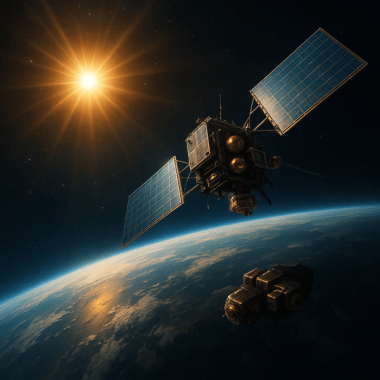
Every day, we hear about the massive energy demands of AI models: towering racks of accelerators, huge data‑centres sweltering under cooling systems, and power bills climbing as the compute hunger grows. What if the next frontier for AI infrastructure wasn’t on Earth at all, but in space? That’s the provocative vision behind Project Suncatcher, a new research initiative announced by Google to explore a space‑based, solar‑powered AI infrastructure using satellite constellations.

ChatGPT Image Nov 5 2025 at 10 55 09 AM

What is Project Suncatcher?

In a nutshell: Google’s researchers have proposed a system in which instead of sprawling Earth‑based data centres, AI compute is shifted to a network (constellation) of satellites in low Earth orbit (LEO), powered by sunlight, linked via optical (laser) inter‑satellite communications, and designed for the compute‑intensive workloads of modern machine‑learning.

  • The orbit: A dawn–dusk sun‑synchronous LEO to maintain continuous sunlight exposure.
  • Solar productivity: Up to 8x more effective than Earth-based panels due to absence of atmosphere and constant sunlight.
  • Compute units: Specialized hardware like Google’s TPUs, tested for space conditions and radiation.
  • Inter-satellite links: Optical links at tens of terabits per second, operating over short distances in tight orbital clusters.
  • Prototyping: First satellite tests planned for 2027 in collaboration with Planet.

Why is Google Doing This?

1. Power & Cooling Bottlenecks

Terrestrial data centres are increasingly constrained by power, cooling, and environmental impact. Space offers an abundant solar supply and reduces many of these bottlenecks.

2. Efficiency Advantage

Solar panels in orbit are drastically more efficient, yielding higher power per square meter than ground systems.

3. Strategic Bet

This is a moonshot—an early move in what could become a key infrastructure play if space-based compute proves viable.

4. Economic Viability

Launch costs dropping to $200/kg to LEO would make orbital AI compute cost-competitive with Earth-based data centres on a power basis.

Major Technical & Operational Challenges

  • Formation flying & optical links: High-precision orbital positioning and reliable laser communications are technically complex.
  • Radiation tolerance: Space radiation threatens hardware longevity; early tests show promise but long-term viability is uncertain.
  • Thermal management: Heat dissipation without convection is a core engineering challenge.
  • Ground links & latency: High-bandwidth optical Earth links are essential but still developing.
  • Debris & regulatory risks: Space congestion and environmental impact from satellites remain hot-button issues.
  • Economic timing: Launch cost reductions are necessary to reach competitive viability.

Implications & Why It Matters

  • Shifts in compute geography: Expands infrastructure beyond Earth, introducing new attack and failure surfaces.
  • Cybersecurity challenges: Optical link interception, satellite jamming, and AI misuse must be considered.
  • Environmental tradeoffs: Reduces land and power use on Earth but may increase orbital debris and launch emissions.
  • Access disparity: Could create gaps between those who control orbital compute and those who don’t.
  • AI model architecture: Suggests future models may rely on hybrid Earth-space compute paradigms.

My Reflections

I’ve followed large-scale compute for years, and the idea of AI infrastructure in orbit feels like sci-fi—but is inching toward reality. Google’s candid technical paper acknowledges hurdles, but finds no physics-based showstoppers. Key takeaway? As AI pushes physical boundaries, security and architecture need to scale beyond the stratosphere.

Conclusion

Project Suncatcher hints at a future where data centres orbit Earth, soaking up sunlight, and coordinating massive ML workloads across space. The prototype is still years off, but the signal is clear: the age of terrestrial-only infrastructure is ending. We must begin securing and architecting for a space-based AI future now—before the satellites go live.

What to Watch

  • Google’s 2027 prototype satellite launch
  • Performance of space-grade optical interconnects
  • Launch cost trends (< $200/kg)
  • Regulatory and environmental responses
  • Moves by competitors like SpaceX, NVIDIA, or governments

References

  1. https://blog.google/technology/research/google-project-suncatcher/
  2. https://research.google/blog/exploring-a-space-based-scalable-ai-infrastructure-system-design/
  3. https://services.google.com/fh/files/misc/suncatcher_paper.pdf
  4. https://9to5google.com/2025/11/04/google-project-suncatcher/
  5. https://tomshardware.com/tech-industry/artificial-intelligence/google-exploring-putting-ai-data-centers-in-space-project-suncatcher
  6. https://www.theguardian.com/technology/2025/nov/04/google-plans-to-put-datacentres-in-space-to-meet-demand-for-ai

Build Systems for Your Worst Days, Not Your Best

I’ve had those days. You know the ones: back-to-back meetings, your inbox growing like a fungal bloom in the dark, and just a single, precious hour to get anything meaningful done. Those are the days when your tools, workflows, and systems either rise to meet the challenge—or collapse like a Jenga tower on a fault line.

And that’s exactly why I build systems for my worst days, not my best ones.

Thinking

When You’re Running on Fumes, Systems Matter Most

It’s easy to fall into the trap of designing productivity systems around our ideal selves—the focused, energized version of us who starts the day with a triple espresso and a clear mind. But that version shows up maybe one or two days a week. The other days? We’re juggling distractions, fighting fatigue, and getting peppered with unexpected tasks.

Those are the days that test whether your systems are real or just aspirational scaffolding.

My Systems for the Storm

To survive—and sometimes even thrive—on my worst days, I rely on a suite of systems I’ve built and refined over time:

  • Custom planners for project, task, and resource tracking. These keep my attention on the highest-leverage work, even when my mind wants to wander.

  • Pre-created GPTs and automations that handle repetitive tasks, from research to analysis. On a rough day, this means things still get done while I conserve cognitive bandwidth.

  • Browser scripts that speed up form fills, document parsing, and other friction-heavy tasks.

  • The EDSAM mental model helps me triage and prioritize quickly without falling into reactive mode. (EDSAM = Eliminate, Delegate, Simplify, Automate, Maintain)

  • A weekly review process that previews the chaos ahead and lets me make strategic decisions before I’m in the thick of it.

These aren’t just optimizations—they’re insulation against chaos.

The Real ROI: More Than Just Productivity

The return on these systems goes well beyond output. It’s about stress management, reduced rumination, and the ability to make clear-headed decisions when everything else is fuzzy. I walk into tough weeks with more confidence, not because I expect them to be easy—but because I know my systems will hold.

And here’s something unexpected: these systems have also amplified my impact as a mentor. By teaching others how I think about task design, tooling, and automation, I’m not just giving them tips—I’m offering frameworks they can build around their own worst days.

Shifting the Culture of “Reactive Work”

When I work with teams, I often see systems built for the ideal: smooth days, few interruptions, time to think. But real-world conditions rarely comply. That’s why I try to model and teach the philosophy of resilient systems—ones that don’t break when someone’s sick, a deadline moves up, or a crisis hits.

Through mentoring and content, I help others see that systems aren’t about rigidity—they’re about readiness.

The Guiding Principle

Here’s the rule I live by:

“The systems have to make bad days better, and the worst days minimally productive—otherwise, they need to be optimized or replaced.”

That sentence lives in the back of my mind as I build, test, and adapt everything from automations to mental models. Because I don’t just want to do great work on my best days—I want to still do meaningful work on my worst ones.

And over time, those dividends compound in ways you can’t measure in a daily planner.

Support My Work

Support the creation of high-impact content and research. Sponsorship opportunities are available for specific topics, whitepapers, tools, or advisory insights. Learn more or contribute here: Buy Me A Coffee


* AI tools were used as a research assistant for this content, but human moderation and writing are also included. The included images are AI-generated.

The Dopamine Management Framework: A Rationalist’s Guide to Balancing Reward, Focus, and Drive

Modern knowledge‑workers and rationalists live in a gilded cage of stimulation. Our smartphones ping. Social apps lure. Productivity tools promise efficiency but bring micro‑interruptions. It all feels like progress — until it doesn’t. Until motivation runs dry. Attention flattens. Dissatisfaction sets in.

Yes, you already know that the neurotransmitter Dopamine is often called the brain’s “reward” signal. But what if you treated your dopaminergic system like budget, or like time—with strategy, measurement, and purpose? Not to eliminate pleasure (this isn’t asceticism) — but to reclaim control over what motivates you, and how you pursue meaningful goals.

MentalModels

In this post I’ll introduce a practical four‑step framework: Track → Taper → Tune → Train. One by one we’ll unpack how these phases map to your environment, habits, and long‑term motivation architecture.


Why This Matters

Technology has turned dopamine hijacking into default mode.
When you’re not just distracted — when your reward system is distorted — you may see:

  • shorter attention spans

  • effort‑aversion to sustained work

  • a shift toward quick‑hit gratification instead of the rich, long‑term satisfaction of building something meaningful
    And for rationalists — who prize clarity, deep work, coherent motivation — this is more than nuisance. It becomes structural.

In neuroscience terms, dopamine isn’t simply about pleasure. It plays a key role in motivating actions and associating them with value. PNAS+2PMC+2 And when we flood that system with high‑intensity, low‑effort reward signals, we degrade our sensitivity to more subtle, delayed rewards. Penn LPS Online+1

So: the problem isn’t dopamine. The problem is unmanaged dopamine.


The Framework: Track → Taper → Tune → Train

1. Track – Map Your Dopamine Environment

Key Idea: You can’t manage what you don’t measure.

What to do:

  • Identify your “dopamine hotspots”: e.g., social media scrolls, email pings, news bingeing, caffeine hits, instant feedback tools.

  • Categorize each by intensity (for example: doom‑scrolling social feed = high; reading a print journal = medium; writing code without interruption = low but delayed).

  • Track “dopamine crashes” — times when your motivation, energy or focus drops sharply: what preceded them? A 10‑minute feed of pointless info? A high‑caffeine spike?

  • Use a “dopamine log” for ~5 days. Each time you get a strong hit or crash, note: time, source, duration, effect on your focus/mood.

Why this works:
Neuroscience shows dopamine’s role in signalling future reward and motivating effort. PMC+1 If your baseline is chaotic — with bursts and dips coming from external stimuli — your system becomes reactive instead of intentional.

Pro tip: Use a very simple spreadsheet or notebook. Column for “stimulus,” “duration,” “felt effect,” “focus after”. Try to track before and after (e.g., “30 min Instagram → motivation drop from 8→3”).


2. Taper – Reduce Baseline Dopamine Stimuli

Key Idea: A high baseline of stimulation dulls your sensitivity to more meaningful rewards — and makes focused work feel intolerable.

Actions:

  • Pick one high‑stimulation habit to taper (don’t go full monk‑mode yet).

    • Example: replace Instagram scrolling with reading a curated newsletter.

    • Replace energy drinks with green tea in the afternoon.

  • Introduce “dopamine fasting” blocks: e.g., one hour per day with no screens, no background noise, no caffeine.

  • Avoid the pitfall: icy abstinence. The goal is balance, not deprivation.

Why this matters:
The brain’s reward pathways are designed for survival‑based stimuli, not for an endless stream of instant thrills. Artificially high dopaminergic surges (via apps, notifications, etc.) produce adaptation and tolerance. The system flattens. Penn LPS Online+1 When your brain expects high‑intensity reward, the normal things (writing, thinking, reflecting) feel dull.

Implementation tip: Schedule your tapering. For example: disable social apps for 30 minutes after waking, replace that slot with reading or journaling. After two weeks, increase to 45 minutes.


3. Tune – Align Dopamine with Your Goals

Key Idea: You can train your brain to associate dopamine with meaningful effort, not just passive inputs.

Actions:

  • Use temptation bundling: attach a small reward to focused work (e.g., write for 30 minutes and then enjoy an espresso or a favorite podcast).

  • Redefine “wins”: instead of just “I shipped feature X” (outcome), track process‑goals: “I wrote 300 words”, “I did a 50‑minute uninterrupted session”.

  • Break larger tasks into small units you can complete (write 100 words instead of “write article”). Each completion triggers a minor dopamine hit.

  • Create a “dopamine calendar”: log your wins (process wins), and visually see consistency over intensity.

Why this works:
Dopamine is deeply tied into incentive salience — the “wanting” of a reward — and prediction errors in reward systems. Wikipedia+1 If you signal to the brain that the processes you value are themselves rewarding, you shift your internal reward map away from only “instant high” to “meaningful engagement”.

Tip: Use a simple app or notebook: every time you finish a mini‑task, mark a win. Then allow yourself the small reward. Over time, you’ll build momentum.


4. Train – Build a Resilient Motivation System

Key Idea: Sustained dopamine stability requires training for delayed rewards, boredom tolerance — the opposite of constant high‑arousal stimulation.

Actions:

  • Practice boredom training: spend 10 minutes a day doing nothing (no phone, no music, no output). Just sit, think, breathe.

  • Introduce deep‑focus blocks: schedule 25‑90 minute sessions where you do high‑value work with minimal stimulation (no notifications, no tab switching).

  • Use dopamine‑contrast days: alternate between one “deep focus” day and one “leisure‑heavy” day to re‑sensitise your reward system.

  • Mindset shift: view boredom not as failure, but as a muscle you’re building.

Why this matters:
Our neurobiology thrives on novelty, yet adapts quickly. Without training in low‑arousal states and delayed gratification, your motivation becomes brittle. The brain shifts toward short‑term cues. Neuroscience has shown that dopamine dysregulation often involves reduced ability to tolerate low stimulation or delayed reward. Penn LPS Online

Implementation tip: Start small. Two times a week schedule a 20‑minute deep‑focus block. Also schedule two separate 10‑minute “nothing” blocks. Build from there.


Real‑Life Example: Dopamine Rewiring in Practice

Here’s a profile: A freelance developer found that by mid‑afternoon, her energy and motivation always crashed. She logged her day and discovered the pattern: morning caffeine + Twitter + Discord chat = dopamine spike early. Then the crash happened by 2 PM.

She applied the framework:

  • Track: She logged each social/communication/caffeine event, noted effects on focus.

  • Taper: Reduced caffeine, postponed social scrolling to after 5 PM. Introduced a 15‑minute walk + journaling break instead of Twitter at lunch.

  • Tune: She broke her workday into 30‑minute coding sprints, each followed by a small reward (a glass of water + 2‑minute stretch). She logged each sprint as a “win”.

  • Train: Added a daily 20‑minute “nothing” block (no tech) and scheduled two deep focus blocks of 60 minutes each.

Results after ~10 days: Her uninterrupted focus blocks grew by ~45 minutes; she described herself as “more driven but less scattered.”


Metrics to Track

To see if this is working for you, here are metrics you might adopt:

  • Focus duration without switching: how long can you work before you switch tasks or get distracted?

  • Number of process‑wins logged per day: the small completed units.

  • Perceived energy levels (AM vs. PM): rate from 1–10 each day.

  • Mood ratings before and after key dopamine events: note spikes and crashes.

Track weekly. Look for improvement in focus duration, fewer mid‑day crashes, and a more stable mood curve.


Next Steps

Here’s a roadmap:

  1. Audit your top 5 dopamine sources (what gives you quick hits, what gives you slow/meaningful reward).

  2. Pick one high‑stimulation habit to taper this week.

  3. Set up a simple win‑log for process goals starting today.

  4. Introduce a 5‑minute boredom session each day (just 5 minutes is fine).

  5. At the end of the week, reassess: What improved? What got worse? Adjust.

Remember: dopamine management is iterative. It’s not about perfection or asceticism — it’s about designing your internal reward system so you drive it, instead of being driven by it.


Closing Thought

Managing dopamine isn’t about restriction. It’s about deliberate design. It’s about aligning your reward architecture with your values, your goals, your energy rhythms. It’s about reclaiming autonomy.

When the world’s stimuli are engineered to hijack your motivation, the only honest defense is a framework: one that lets you track what’s actually happening, taper impulsive rewards, tune process‑based wins, and train your system for deep, sustained focus.

If you’re someone who cares about clarity, meaning, and control—this isn’t optional. It’s foundational.

Here’s to managing our dopamine, instead of letting it manage us.


* AI tools were used as a research assistant for this content, but human moderation and writing are also included. The included images are AI-generated.

The Dopamine Management Framework: A Rationalist’s Guide to Balancing Reward, Focus, and Drive

Modern knowledge‑workers and rationalists live in a gilded cage of stimulation. Our smartphones ping. Social apps lure. Productivity tools promise efficiency but bring micro‑interruptions. It all feels like progress — until it doesn’t. Until motivation runs dry. Attention flattens. Dissatisfaction sets in.

Yes, you already know that the neurotransmitter Dopamine is often called the brain’s “reward” signal. But what if you treated your dopaminergic system like budget, or like time—with strategy, measurement, and purpose? Not to eliminate pleasure (this isn’t asceticism) — but to reclaim control over what motivates you, and how you pursue meaningful goals.

MentalModels

In this post I’ll introduce a practical four‑step framework: Track → Taper → Tune → Train. One by one we’ll unpack how these phases map to your environment, habits, and long‑term motivation architecture.


Why This Matters

Technology has turned dopamine hijacking into default mode.
When you’re not just distracted — when your reward system is distorted — you may see:

  • shorter attention spans

  • effort‑aversion to sustained work

  • a shift toward quick‑hit gratification instead of the rich, long‑term satisfaction of building something meaningful
    And for rationalists — who prize clarity, deep work, coherent motivation — this is more than nuisance. It becomes structural.

In neuroscience terms, dopamine isn’t simply about pleasure. It plays a key role in motivating actions and associating them with value. PNAS+2PMC+2 And when we flood that system with high‑intensity, low‑effort reward signals, we degrade our sensitivity to more subtle, delayed rewards. Penn LPS Online+1

So: the problem isn’t dopamine. The problem is unmanaged dopamine.


The Framework: Track → Taper → Tune → Train

1. Track – Map Your Dopamine Environment

Key Idea: You can’t manage what you don’t measure.

What to do:

  • Identify your “dopamine hotspots”: e.g., social media scrolls, email pings, news bingeing, caffeine hits, instant feedback tools.

  • Categorize each by intensity (for example: doom‑scrolling social feed = high; reading a print journal = medium; writing code without interruption = low but delayed).

  • Track “dopamine crashes” — times when your motivation, energy or focus drops sharply: what preceded them? A 10‑minute feed of pointless info? A high‑caffeine spike?

  • Use a “dopamine log” for ~5 days. Each time you get a strong hit or crash, note: time, source, duration, effect on your focus/mood.

Why this works:
Neuroscience shows dopamine’s role in signalling future reward and motivating effort. PMC+1 If your baseline is chaotic — with bursts and dips coming from external stimuli — your system becomes reactive instead of intentional.

Pro tip: Use a very simple spreadsheet or notebook. Column for “stimulus,” “duration,” “felt effect,” “focus after”. Try to track before and after (e.g., “30 min Instagram → motivation drop from 8→3”).


2. Taper – Reduce Baseline Dopamine Stimuli

Key Idea: A high baseline of stimulation dulls your sensitivity to more meaningful rewards — and makes focused work feel intolerable.

Actions:

  • Pick one high‑stimulation habit to taper (don’t go full monk‑mode yet).

    • Example: replace Instagram scrolling with reading a curated newsletter.

    • Replace energy drinks with green tea in the afternoon.

  • Introduce “dopamine fasting” blocks: e.g., one hour per day with no screens, no background noise, no caffeine.

  • Avoid the pitfall: icy abstinence. The goal is balance, not deprivation.

Why this matters:
The brain’s reward pathways are designed for survival‑based stimuli, not for an endless stream of instant thrills. Artificially high dopaminergic surges (via apps, notifications, etc.) produce adaptation and tolerance. The system flattens. Penn LPS Online+1 When your brain expects high‑intensity reward, the normal things (writing, thinking, reflecting) feel dull.

Implementation tip: Schedule your tapering. For example: disable social apps for 30 minutes after waking, replace that slot with reading or journaling. After two weeks, increase to 45 minutes.


3. Tune – Align Dopamine with Your Goals

Key Idea: You can train your brain to associate dopamine with meaningful effort, not just passive inputs.

Actions:

  • Use temptation bundling: attach a small reward to focused work (e.g., write for 30 minutes and then enjoy an espresso or a favorite podcast).

  • Redefine “wins”: instead of just “I shipped feature X” (outcome), track process‑goals: “I wrote 300 words”, “I did a 50‑minute uninterrupted session”.

  • Break larger tasks into small units you can complete (write 100 words instead of “write article”). Each completion triggers a minor dopamine hit.

  • Create a “dopamine calendar”: log your wins (process wins), and visually see consistency over intensity.

Why this works:
Dopamine is deeply tied into incentive salience — the “wanting” of a reward — and prediction errors in reward systems. Wikipedia+1 If you signal to the brain that the processes you value are themselves rewarding, you shift your internal reward map away from only “instant high” to “meaningful engagement”.

Tip: Use a simple app or notebook: every time you finish a mini‑task, mark a win. Then allow yourself the small reward. Over time, you’ll build momentum.


4. Train – Build a Resilient Motivation System

Key Idea: Sustained dopamine stability requires training for delayed rewards, boredom tolerance — the opposite of constant high‑arousal stimulation.

Actions:

  • Practice boredom training: spend 10 minutes a day doing nothing (no phone, no music, no output). Just sit, think, breathe.

  • Introduce deep‑focus blocks: schedule 25‑90 minute sessions where you do high‑value work with minimal stimulation (no notifications, no tab switching).

  • Use dopamine‑contrast days: alternate between one “deep focus” day and one “leisure‑heavy” day to re‑sensitise your reward system.

  • Mindset shift: view boredom not as failure, but as a muscle you’re building.

Why this matters:
Our neurobiology thrives on novelty, yet adapts quickly. Without training in low‑arousal states and delayed gratification, your motivation becomes brittle. The brain shifts toward short‑term cues. Neuroscience has shown that dopamine dysregulation often involves reduced ability to tolerate low stimulation or delayed reward. Penn LPS Online

Implementation tip: Start small. Two times a week schedule a 20‑minute deep‑focus block. Also schedule two separate 10‑minute “nothing” blocks. Build from there.


Real‑Life Example: Dopamine Rewiring in Practice

Here’s a profile: A freelance developer found that by mid‑afternoon, her energy and motivation always crashed. She logged her day and discovered the pattern: morning caffeine + Twitter + Discord chat = dopamine spike early. Then the crash happened by 2 PM.

She applied the framework:

  • Track: She logged each social/communication/caffeine event, noted effects on focus.

  • Taper: Reduced caffeine, postponed social scrolling to after 5 PM. Introduced a 15‑minute walk + journaling break instead of Twitter at lunch.

  • Tune: She broke her workday into 30‑minute coding sprints, each followed by a small reward (a glass of water + 2‑minute stretch). She logged each sprint as a “win”.

  • Train: Added a daily 20‑minute “nothing” block (no tech) and scheduled two deep focus blocks of 60 minutes each.

Results after ~10 days: Her uninterrupted focus blocks grew by ~45 minutes; she described herself as “more driven but less scattered.”


Metrics to Track

To see if this is working for you, here are metrics you might adopt:

  • Focus duration without switching: how long can you work before you switch tasks or get distracted?

  • Number of process‑wins logged per day: the small completed units.

  • Perceived energy levels (AM vs. PM): rate from 1–10 each day.

  • Mood ratings before and after key dopamine events: note spikes and crashes.

Track weekly. Look for improvement in focus duration, fewer mid‑day crashes, and a more stable mood curve.


Next Steps

Here’s a roadmap:

  1. Audit your top 5 dopamine sources (what gives you quick hits, what gives you slow/meaningful reward).

  2. Pick one high‑stimulation habit to taper this week.

  3. Set up a simple win‑log for process goals starting today.

  4. Introduce a 5‑minute boredom session each day (just 5 minutes is fine).

  5. At the end of the week, reassess: What improved? What got worse? Adjust.

Remember: dopamine management is iterative. It’s not about perfection or asceticism — it’s about designing your internal reward system so you drive it, instead of being driven by it.


Closing Thought

Managing dopamine isn’t about restriction. It’s about deliberate design. It’s about aligning your reward architecture with your values, your goals, your energy rhythms. It’s about reclaiming autonomy.

When the world’s stimuli are engineered to hijack your motivation, the only honest defense is a framework: one that lets you track what’s actually happening, taper impulsive rewards, tune process‑based wins, and train your system for deep, sustained focus.

If you’re someone who cares about clarity, meaning, and control—this isn’t optional. It’s foundational.

Here’s to managing our dopamine, instead of letting it manage us.


* AI tools were used as a research assistant for this content, but human moderation and writing are also included. The included images are AI-generated.