When the Machine Does (Too Much of) the Thinking: Preserving Human Judgment and Skill in the Age of AI

We’re entering an age where artificial intelligence is no longer just another tool — it’s quickly becoming the path of least resistance. AI drafts our messages, summarizes our meetings, writes our reports, refines our images, and even offers us creative ideas before we’ve had a chance to think of any ourselves.

Convenience is powerful. But convenience has a cost.

As we let AI take over more and more of the cognitive load, something subtle but profound is at risk: the slow erosion of our own human skills, craft, judgment, and agency. This article explores that risk — drawing on emerging research — and offers mental models and methodologies for using AI without losing ourselves in the process.

SqueezedByAI3


The Quiet Creep of Cognitive Erosion

Automation and the “Out-of-the-Loop” Problem

History shows us what happens when humans rely too heavily on automation. In aviation and other high-stakes fields, operators who relied on autopilot for long periods became less capable of manual control and situational awareness. This degradation is sometimes called the “out-of-the-loop performance problem.”

AI magnifies this. While traditional automation replaced physical tasks, AI increasingly replaces cognitive ones — reasoning, drafting, synthesizing, deciding.

Cognitive Offloading

Cognitive offloading is when we delegate thinking, remembering, or problem-solving to external systems. Offloading basic memory to calendars or calculators is one thing; offloading judgment, analysis, and creativity to AI is another.

Research shows that when AI assists with writing, analysis, and decision-making, users expend less mental effort. Less effort means fewer opportunities for deep learning, reflection, and mastery. Over time, this creates measurable declines in memory, reasoning, and problem-solving ability.

Automation Bias

There is also the subtle psychological tendency to trust automated outputs even when the automation is wrong — a phenomenon known as automation bias. As AI becomes more fluent, more human-like, and more authoritative, the risk of uncritical acceptance increases. This diminishes skepticism, undermines oversight, and trains us to defer rather than interrogate.

Distributed Cognitive Atrophy

Some researchers propose an even broader idea: distributed cognitive atrophy. As humans rely on AI for more of the “thinking work,” the cognitive load shifts from individuals to systems. The result isn’t just weaker skills — it’s a change in how we think, emphasizing efficiency and speed over depth, nuance, curiosity, or ambiguity tolerance.


Why It Matters

Loss of Craft and Mastery

Skills like writing, design, analysis, and diagnosis come from consistent practice. If AI automates practice, it also automates atrophy. Craftsmanship — the deep, intuitive, embodied knowledge that separates experts from novices — cannot survive on “review mode” alone.

Fragility and Over-Dependence

AI is powerful, but it is not infallible. Systems fail. Context shifts. Edge cases emerge. Regulations change. When that happens, human expertise must be capable — not dormant.

An over-automated society is efficient — but brittle.

Decline of Critical Thinking

When algorithms become our source of answers, humans risk becoming passive consumers rather than active thinkers. Critical thinking, skepticism, and curiosity diminish unless intentionally cultivated.

Society-Scale Consequences

If entire generations grow up doing less cognitive work, relying more on AI for thinking, writing, and deciding, the long-term societal cost may be profound: fewer innovators, weaker democratic deliberation, and an erosion of collective intellectual capital.


Mental Models for AI-Era Thinking

To navigate a world saturated with AI without surrendering autonomy or skill, we need deliberate mental frameworks:

1. AI as Co-Pilot, Not Autopilot

AI should support, not replace. Treat outputs as suggestions, not solutions. The human remains responsible for direction, reasoning, and final verification.

2. The Cognitive Gym Model

Just as muscles atrophy without resistance, cognitive abilities decline without challenge. Integrate “manual cognitive workouts” into your routine: writing without AI, solving problems from scratch, synthesizing information yourself.

3. Dual-Track Workflow (“With AI / Without AI”)

Maintain two parallel modes of working: one with AI enabled for efficiency, and another deliberately unplugged to keep craft and judgment sharp.

4. Critical-First Thinking

Assume AI could be wrong. Ask:

  • What assumptions might this contain?

  • What’s missing?

  • What data or reasoning would I need to trust this?
    This keeps skepticism alive.

5. Meta-Cognitive Awareness

Ease of output does not equal understanding. Actively track what you actually know versus what the AI merely gives you.

6. Progressive Autonomy

Borrowing from educational scaffolding: use AI to support learning early, but gradually remove dependence as expertise grows.


Practical Methodologies

These practices help preserve human skill while still benefiting from AI:

Personal Practices

  • Manual Days or Sessions: Dedicate regular time to perform tasks without AI.

  • Delayed AI Use: Attempt the task first, then use AI to refine or compare.

  • AI-Pull, Not AI-Push: Use AI only when you intentionally decide it is needed.

Team or Organizational Practices

  • Explain-Your-Reasoning Requirements: Even if AI assists, humans must articulate the rationale behind decisions.

  • Challenge-and-Verify Pass: Explicitly review AI outputs for flaws or blind spots.

  • Assign Human-Only Tasks: Preserve areas where human judgment, ethics, risk assessment, or creativity are indispensable.

Educational or Skill-Building Practices

  • Scaffold AI Use: Early support, later independence.

  • Complex, Ambiguous Problem Sets: Encourage tasks that require nuance and cannot be easily automated.

Design & Cultural Practices

  • Build AI as Mentor or Thought Partner: Tools should encourage reflection, not replacement.

  • Value Human Expertise: Track and reward critical thinking, creativity, and manual competence — not just AI-accelerated throughput.


Why This Moment Matters

AI is becoming ubiquitous faster than any cognitive technology in human history. Without intentional safeguards, the path of least resistance becomes the path of most cognitive loss. The more powerful AI becomes, the more conscious we must be in preserving the very skills that make us adaptable, creative, and resilient.


A Personal Commitment

Before reaching for AI, pause and ask:

“Is this something I want the machine to do — or something I still need to practice myself?”

If it’s the latter, do it yourself.
If it’s the former, use the AI — but verify the output, reflect on it, and understand it fully.

Convenience should not come at the cost of capability.


Support My Work

Support the creation of high-impact content and research. Sponsorship opportunities are available for specific topics, whitepapers, tools, or advisory insights. Learn more or contribute here: Buy Me A Coffee


References 

  1. Macnamara, B. N. (2024). Research on automation-related skill decay and AI-assisted performance.

  2. Gerlich, M. (2025). Studies on cognitive offloading and the effects of AI on memory and critical thinking.

  3. Jadhav, A. (2025). Work on distributed cognitive atrophy and how AI reshapes thought.

  4. Chirayath, G. (2025). Analysis of cognitive trade-offs in AI-assisted work.

  5. Chen, Y., et al. (2025). Experimental results on the reduction of cognitive effort when using AI tools.

  6. Jose, B., et al. (2025). Cognitive paradoxes in human-AI interaction and reduced higher-order thinking.

  7. Kumar, M., et al. (2025). Evidence of cognitive consequences and skill degradation linked to AI use.

  8. Riley, C., et al. (2025). Survey of cognitive, behavioral, and emotional impacts of AI interactions.

  9. Endsley, M. R., Kiris, E. O. (1995). Foundational work on the out-of-the-loop performance problem.

  10. Research on automation bias and its effects on human decision-making.

  11. Discussions on the Turing Trap and the risks of designing AI primarily for human replacement.

  12. Natali, C., et al. (2025). AI-induced deskilling in medical diagnostics.

  13. Commentary on societal-scale cognitive decline associated with AI use.


* AI tools were used as a research assistant for this content, but human moderation and writing are also included. The included images are AI-generated.
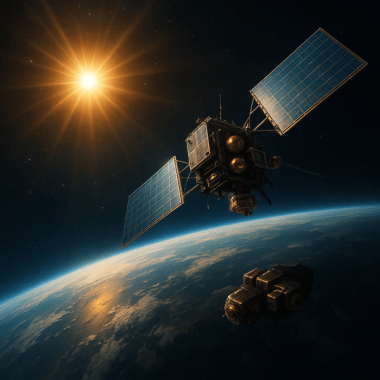
“Project Suncatcher”: Google’s Bold Leap to Space‑Based AI

Every day, we hear about the massive energy demands of AI models: towering racks of accelerators, huge data‑centres sweltering under cooling systems, and power bills climbing as the compute hunger grows. What if the next frontier for AI infrastructure wasn’t on Earth at all, but in space? That’s the provocative vision behind Project Suncatcher, a new research initiative announced by Google to explore a space‑based, solar‑powered AI infrastructure using satellite constellations.

ChatGPT Image Nov 5 2025 at 10 55 09 AM

What is Project Suncatcher?

In a nutshell: Google’s researchers have proposed a system in which instead of sprawling Earth‑based data centres, AI compute is shifted to a network (constellation) of satellites in low Earth orbit (LEO), powered by sunlight, linked via optical (laser) inter‑satellite communications, and designed for the compute‑intensive workloads of modern machine‑learning.

  • The orbit: A dawn–dusk sun‑synchronous LEO to maintain continuous sunlight exposure.
  • Solar productivity: Up to 8x more effective than Earth-based panels due to absence of atmosphere and constant sunlight.
  • Compute units: Specialized hardware like Google’s TPUs, tested for space conditions and radiation.
  • Inter-satellite links: Optical links at tens of terabits per second, operating over short distances in tight orbital clusters.
  • Prototyping: First satellite tests planned for 2027 in collaboration with Planet.

Why is Google Doing This?

1. Power & Cooling Bottlenecks

Terrestrial data centres are increasingly constrained by power, cooling, and environmental impact. Space offers an abundant solar supply and reduces many of these bottlenecks.

2. Efficiency Advantage

Solar panels in orbit are drastically more efficient, yielding higher power per square meter than ground systems.

3. Strategic Bet

This is a moonshot—an early move in what could become a key infrastructure play if space-based compute proves viable.

4. Economic Viability

Launch costs dropping to $200/kg to LEO would make orbital AI compute cost-competitive with Earth-based data centres on a power basis.

Major Technical & Operational Challenges

  • Formation flying & optical links: High-precision orbital positioning and reliable laser communications are technically complex.
  • Radiation tolerance: Space radiation threatens hardware longevity; early tests show promise but long-term viability is uncertain.
  • Thermal management: Heat dissipation without convection is a core engineering challenge.
  • Ground links & latency: High-bandwidth optical Earth links are essential but still developing.
  • Debris & regulatory risks: Space congestion and environmental impact from satellites remain hot-button issues.
  • Economic timing: Launch cost reductions are necessary to reach competitive viability.

Implications & Why It Matters

  • Shifts in compute geography: Expands infrastructure beyond Earth, introducing new attack and failure surfaces.
  • Cybersecurity challenges: Optical link interception, satellite jamming, and AI misuse must be considered.
  • Environmental tradeoffs: Reduces land and power use on Earth but may increase orbital debris and launch emissions.
  • Access disparity: Could create gaps between those who control orbital compute and those who don’t.
  • AI model architecture: Suggests future models may rely on hybrid Earth-space compute paradigms.

My Reflections

I’ve followed large-scale compute for years, and the idea of AI infrastructure in orbit feels like sci-fi—but is inching toward reality. Google’s candid technical paper acknowledges hurdles, but finds no physics-based showstoppers. Key takeaway? As AI pushes physical boundaries, security and architecture need to scale beyond the stratosphere.

Conclusion

Project Suncatcher hints at a future where data centres orbit Earth, soaking up sunlight, and coordinating massive ML workloads across space. The prototype is still years off, but the signal is clear: the age of terrestrial-only infrastructure is ending. We must begin securing and architecting for a space-based AI future now—before the satellites go live.

What to Watch

  • Google’s 2027 prototype satellite launch
  • Performance of space-grade optical interconnects
  • Launch cost trends (< $200/kg)
  • Regulatory and environmental responses
  • Moves by competitors like SpaceX, NVIDIA, or governments

References

  1. https://blog.google/technology/research/google-project-suncatcher/
  2. https://research.google/blog/exploring-a-space-based-scalable-ai-infrastructure-system-design/
  3. https://services.google.com/fh/files/misc/suncatcher_paper.pdf
  4. https://9to5google.com/2025/11/04/google-project-suncatcher/
  5. https://tomshardware.com/tech-industry/artificial-intelligence/google-exploring-putting-ai-data-centers-in-space-project-suncatcher
  6. https://www.theguardian.com/technology/2025/nov/04/google-plans-to-put-datacentres-in-space-to-meet-demand-for-ai

When Your Blender Joins the Blockchain

It might sound like science fiction today, but the next ten years could make it ordinary: your blender might mix your perfect cocktail, then—while you sleep—lend its spare compute cycles to a local bar’s supply-chain optimizer. In exchange, you’d get rewarded for the electricity and resources your device contributed. Scale this across millions of homes and suddenly the world looks very different. Every house becomes a miniature data center, woven into a global fabric of computing power.

ChatGPT Image Sep 25 2025 at 12 55 19 PM

Privacy First

One of the most immediate wins of pushing AI inference to the edge is privacy. By processing data locally, devices avoid shipping raw information back to centralized servers where it becomes a high-value target. Dense data lakes are magnets for attackers because a single compromise yields massive returns. Edge AI reduces that density, scattering risk across countless smaller nodes. It’s harder to attack everyone’s devices than it is to breach a single hyperscale database.

This isn’t just theory—it’s a fundamental shift. Edge computing changes the economics of data theft. Attacks that once had high return on investment may no longer be worth the effort.

Consensus as a Truth Filter

Consensus networks add another dimension. We already know them as the backbone of blockchain, but in the context of distributed AI, they become something else: a truth filter. Imagine multiple edge nodes each running inference on the same prompt. Instead of trusting a single output, the network votes and distills multiple responses into an accepted answer. The extra cost in latency is justified when accuracy matters—medical diagnostics, financial decisions, safety-critical automation.

For lower-stakes tasks—summaries, jokes, quick recommendations—the system can scale back, trading consensus depth for speed. Over time, AI itself will learn to decide how much verification is required for each task.

Incentives and Resource Markets

The second wave of opportunity is in incentives. Idle devices represent untapped capacity. Consensus networks paired with smart contracts can manage marketplaces for these resources, rewarding participants when their devices contribute compute cycles or model updates. The beauty is that markets—not committees—decide what form those rewards take. Tokens, credits, discounts, or even service-level benefits can evolve naturally.

The result is a world where your blender, your TV, your thermostat—all ASIC-equipped and AI-capable—become not just appliances, but contributors to your digital economy.

Governance Inside the Network

Who sets the rules in such a system? Traditional standards bodies may not keep up. Here, governance itself can become part of the consensus. Users and communities establish rules through smart contracts and incentive structures, punishing malicious behavior and rewarding cooperation. This is governance baked directly into the infrastructure rather than layered on top of it.

Risks and Controls

The risks are obvious. Energy consumption, gaming the incentive systems, malicious actors poisoning updates, and threats we can’t even perceive yet. But here is where distributed control matters most. Huston’s Postulate tells us that controls grow stronger the closer they are—logically or physically—to the assets they protect. Embedding controls across a mesh of devices, coordinated by consensus and smart contracts, creates resilience that a single central gatekeeper can never achieve.

The Punchline

One day, your blender may make the perfect cocktail, make money for you when it’s idle, and contribute to a global wealth of computing resources. Beginning to see our devices as investments—tools that not only serve us directly but also join collective systems that benefit others—may be the real step forward. Not a disruption, but an evolution, shaping how intelligence, value, and trust flow through everyday life.

Support My Work

Support the creation of high-impact content and research. Sponsorship opportunities are available for specific topics, whitepapers, tools, or advisory insights. Learn more or contribute here: Buy Me A Coffee


* AI tools were used as a research assistant for this content, but human moderation and writing are also included. The included images are AI-generated.

From Tomorrow to Today: Making Futurism Tangible in Your Daily Routine

Futurism often feels like an ethereal daydream—grand, inspiring, but distant. Bold predictions about 2040 stir our imaginations, yet they rarely map into our Monday mornings. Here at notquiterandom.com, I’m proposing a subtle shift: what if we harness those futuristic visions and anchor them in our 2025 daily habits? This is practical futurism in action—turning forecasts into small, meaningful steps we can take now.

Idea


The Disconnect: Why Futurism Feels Abstract

  • Futurism often lives in abstraction: TED talks and futurology books project us forward—yet too often, they’re unmoored from our present experiences.

  • Technology predictions feel lofty, not livable: We talk AI, distributed computing, or extended reality—but rarely consider how they’ll shape our morning routines, grocery runs, or mid-day breaks in the near term.

  • Audience craving near-term relevance: Tech-savvy professionals, committed yet pragmatic, want today’sutility—not just speculation about 2040.


What’s Missing: Bridging Forecast with Habit

The gap lies in translation—how do we take big-picture forecasts and convert them into rational, actionable daily practices? It’s not enough to know that “AI will transform everything”—we need to know how it can help us, say, stop overthinking, streamline our routines, or fuel better decision-making today.


Learning from Others: What Works, and Why It’s Still Too Vague

  • Future-self mentoring: A Medium article suggests asking your “future self” for advice—pragmatic, reflective, and personal.

  • Habit stacking for incremental change: Insert new habits into existing ones—an early morning walk after brushing your teeth, for instance.

  • AI as daily assistant: From summarizing Zoom calls to smart recipe creation, these are mini-futures we can live now.

But even these are one-offs rather than a cohesive method. What if there were a structured approach for individuals to act on futurism—not tomorrow, but today?


Core Pillars: Building Practical Futures in 2025

1. Flip 2040 Predictions into 2025 Micro-Actions

Take a prediction—say, “AI-enabled personalization everywhere by 2040”—and turn it into steps:

  • Experiment with AI tools that tailor your workout or meal plan (like those that adapt to mood or leftovers).

  • Automate a routine task you dread—like using AI to summarize meetings.
    These are small bets that reflect future trends in digestible chunks for today.

2. Scenario Planning—For You, Not Just Companies

Rather than corporate foresight, create a mini “personal scenario plan”:

  • Optimistic 2025: AI helps you shave hours off your weekday.

  • Constrained 2025: Tight budgets—but you rely on low-cost hacks and habit stacks.

  • Hybrid 2025: A mix—automated routines and soulful analog rituals share your day.
    Plan habits that thrive in each scenario.

3. The “Small Bets” Approach

Reed habit stacking into futurism:

  • Choose one futuristic habit (e.g., AI-curated learning podcast during walks).

  • Run a low-stakes trial—maybe one week.

  • Reflect: Did it help? Discard, tweak, or embed.
    This mimics how entrepreneurs iterate and adapts futurism into a manageable experiment.


Illustrative Mini-Plan: Futurism Meets the Morning Routine

  1. Habit Stack: After brushing teeth, open AI habit tracker that suggests personalized micro-tasks (breathing, brief learning, stand-up stretch).

  2. Try the 2-Minute Trick: Commit to two minutes of something high-tech or future-oriented—like checking that AI tracker—then see if you naturally continue.

  3. Future-Self Check-In: End the day by journaling a quick note: “If I were living in 2040, how would my present behavior differ?”

These micro-actions fuse futurism with routine, making tomorrow’s edge realities feel like tomorrow’s baseline.


Why It Resonates with notquiterandom Readers

Our audience—rooted in tech awareness, skeptical optimism, and personal agency—wants integrity, not hype. This blend of grounded futurism and reflective practice aligns with:

  • Professional curiosity

  • Self-directed experimentation

  • Meaningful progress framed as actionable—no grand leaps, just deliberate stepping stones


Conclusion: Begin Your 2025 Future Habit

The future doesn’t have to be a distant horizon—it can be woven into your habits now. Start small. Let habit stacking, mini-scenarios, and future-self reflection guide you. Over time, these microscale engagements seed long-term adaptability and readiness.


Your Turn

Ready to design your first micro-bet? Whether it’s a futuristic habit stack, an AI tool tryout, or a scenario exercise, share your experiment. Let’s co-create real futures, one habit at a time.

Supporting My Work

If you found this useful and want to help support my ongoing research into the intersection of cybersecurity, automation, and human-centric design, consider buying me a coffee:

👉 Support on Buy Me a Coffee


* AI tools were used as a research assistant for this content, but human moderation and writing are also included. The included images are AI-generated.

The Coming Collision of Quantum, AI, and Blockchain

I’ve been spending a lot of time lately thinking about what happens when three of the most disruptive technologies on our radar—quantum computing, artificial intelligence, and blockchain—don’t just mature, but collide. Not in isolation, not as separate waves of change, but as a single force of transformation. I’ve come to believe this collision may alter our global systems more profoundly than the Internet ever did, and even more than AI is doing on its own today.

ChatGPT Image Sep 3 2025 at 04 08 19 PM

More Than the Sum of the Parts

Each of these technologies is already disruptive. Quantum promises computational power orders of magnitude beyond anything we can imagine today. AI is rapidly reshaping how we create, work, and decide. Blockchain has redefined ownership, trust, and verification.

But imagine them intertwined. AI powered by quantum computing. Identities and financial transactions rooted in shared blockchains, public and private. Blockchain as the arbiter of identity, of non-repudiation, of who we are and what we’ve agreed to. Smart contracts enhanced by AI that can generate, adjust, and arbitrate terms on the fly. Quantum cryptography woven into blockchains that operate at scales and speeds impossible with today’s systems. AI itself acting as the oracle for contracts, feeding real-time insights into automated agreements.

That’s not incremental progress—that’s tectonic shift.

Systems That Won’t Survive the Collision

Some sectors will feel the tremors first. Finance is obvious, even without the collision. Add in these forces together and you have leverage points that could reset the foundations of how money moves, how markets behave, and how trust is established.

Healthcare, defense, and governance won’t look the same either. Identity frameworks built on quantum-secure blockchains could redefine everything from medical records to voting. Critical infrastructure may evolve to the point where the old approaches don’t make sense anymore—financially, socially, or technologically.

And overlay it all with quantum AI: an intelligence capable of holding vast landscapes of knowledge and spinning out probable solutions to nearly any problem, no matter the complexity. That’s not science fiction—it’s a future horizon. Maybe not tomorrow, maybe not in five years, but possibly in my lifetime.

The Double-Edged Sword

I’m not naive about the risks. All swords cut both ways. Bad actors will find ways to exploit these systems. Tyranny won’t vanish, even in a world of shared prosperity. People are driven by power, and that’s unlikely to change.

But the upside is massive. For emerging economies especially, these collisions could level the field, bringing access, transparency, and efficiency that the old systems have long denied. If global prosperity rises, maybe some incentives for malicious behavior diminish.

Early Sparks and Long Horizons

We’ll see hints and echoes of this in the next decade. Experiments, prototypes, niche applications that give us glimpses of the possible. But the real shifts, the agricultural-revolution-scale changes, may sit 20 to 30 years out. If that horizon holds true, the world my grandchildren inherit will be unrecognizable in ways both challenging and awe-inspiring.

Looking Ahead

I don’t claim to have the answers. What I have is a sense that the collision of quantum, AI, and blockchain is not just coming—it’s inevitable. And when it hits, it will be bigger than the sum of the parts. Bigger than the Internet. Maybe even bigger than the scientific revolution itself.

For now, the best we can do is pay attention, experiment responsibly, and prepare ourselves for a future where the unimaginable becomes the baseline.

Supporting My Work

If you found this useful and want to help support my ongoing research into the intersection of cybersecurity, automation, and human-centric design, consider buying me a coffee:

👉 Support on Buy Me a Coffee


* AI tools were used as a research assistant for this content, but human moderation and writing are also included. The included images are AI-generated.

Advisory in the AI Age: Navigating the “Consulting Crash”


The Erosion of Traditional Advisory Models

The age‑old consulting model—anchored in billable hours and labor‑intensive analysis—is cracking under the weight of AI. Automation of repetitive tasks isn’t horizon‑bound; it’s here. Major firms are bracing:

  • Big Four upheaval — Up to 50% of advisory, audit, and tax roles could vanish in the next few years as AI reshapes margin models and deliverables.
  • McKinsey’s existential shift — AI now enables data analysis and presentation generation in minutes. The firm has restructured around outcome‑based partnerships, with 25% of work tied to tangible business results.
  • “Consulting crash” looming — AI efficiencies combined with contracting policy changes are straining consulting profitability across the board.

ChatGPT Image Aug 11 2025 at 11 41 36 AM

AI‑Infused Advisory: What Real‑World Looks Like

Consulting is no longer just human‑driven—AI is embedded:

  • AI agent swarms — Internal use of thousands of AI agents allows smaller teams to deliver more with less.
  • Generative intelligence at scale — Firm‑specific assistants (knowledge chatbots, slide generators, code copilots) accelerate research, design, and delivery.

Operational AI beats demo AI. The winners aren’t showing prototypes; they’re wiring models into CI/CD, decision flows, controls, and telemetry.

From Billable Hours to Outcome‑Based Value

As AI commoditizes analysis, control shifts to strategic interpretation and execution. That forces a pricing and packaging rethink:

  • Embed, don’t bolt‑on — Architect AI into core processes and guardrails; avoid one‑off reports that age like produce.
  • Price to outcomes — Tie a clear portion of fees to measurable impact: cycle time reduced, error rate dropped, revenue lift captured.
  • Own runbooks — Codify delivery with reference architectures, safety controls, and playbooks clients can operate post‑engagement.

Practical Playbook: Navigating the AI‑Driven Advisory Landscape

  1. Client triage — Segment work into automate (AI‑first), augment (human‑in‑the‑loop), and advise (judgment‑heavy). Push commoditized tasks toward automation; preserve people for interpretation and change‑management.
  2. Infrastructure & readiness audits — Assess data quality, access controls, lineage, model governance, and observability. If the substrate is weak, modernize before strategy.
  3. Outcome‑based offers — Convert packages into fixed‑fee + success components. Define KPIs, timeboxes, and stop‑loss logic up front.
  4. Forward‑Deployed Engineers (FDEs) — Embed build‑capable consultants inside client teams to ship operational AI, not just recommendations.
  5. Lean Rationalism — Apply Lean IT to advisory delivery: remove handoff waste, shorten feedback loops, productize templates, and use automation to erase bureaucratic overhead.

Why This Matters

This isn’t a passing disruption—it’s a structural inflection. Whether you’re solo or running a boutique, the path is clear: dismantle antiquated billing models, anchor on outcomes, and productize AI‑augmented value creation. Otherwise, the market will do the dismantling for you.

Support My Work

Support the creation of high-impact content and research. Sponsorship opportunities are available for specific topics, whitepapers, tools, or advisory insights. Learn more or contribute here: Buy Me A Coffee


References

  1. AI and Trump put consulting firms under pressure — Axios
  2. As AI Comes for Consulting, McKinsey Faces an “Existential” Shift — Wall Street Journal
  3. AI is coming for the Big Four too — Business Insider
  4. Consulting’s AI Transformation — IBM Institute for Business Value
  5. Closing the AI Impact Gap — BCG
  6. Because of AI, Consultants Are Now Expected to Do More — Inc.
  7. AI Transforming the Consulting Industry — Geeky Gadgets

* AI tools were used as a research assistant for this content, but human moderation and writing are also included. The included images are AI-generated.
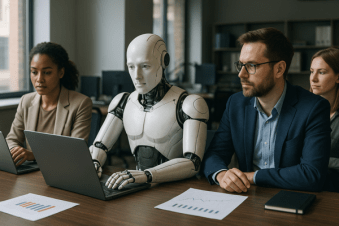
 

The Blended Workforce: Integrating AI Co-Workers into Human Teams

The workplace is evolving. Artificial Intelligence (AI) is no longer a distant concept; it’s now a tangible part of our daily operations. From drafting emails to analyzing complex data sets, AI is becoming an integral member of our teams. This shift towards a “blended workforce”—where humans and AI collaborate—requires us to rethink our roles, responsibilities, and the very fabric of our work culture.

AITeamMember

Redefining Roles in the Age of AI

In this new paradigm, AI isn’t just a tool; it’s a collaborator. It handles repetitive tasks, processes vast amounts of data, and even offers insights that can influence decision-making. However, the human touch remains irreplaceable. Creativity, empathy, and ethical judgment are domains where humans excel and AI still lags. The challenge lies in harmonizing these strengths to create a cohesive team.

Organizations like Duolingo and Shopify are pioneering this integration. They’ve adopted AI-first strategies, emphasizing the augmentation of human capabilities rather than replacement. Employees are encouraged to develop AI proficiency, ensuring they can work alongside these digital counterparts effectively.

Navigating Ethical Waters

With great power comes great responsibility. The integration of AI into the workforce brings forth ethical considerations that cannot be ignored. Transparency is paramount. Employees should be aware when they’re interacting with AI and understand how decisions are made. This clarity builds trust and ensures accountability.

Moreover, biases embedded in AI algorithms can perpetuate discrimination if not addressed. Regular audits and diverse data sets are essential to mitigate these risks. Ethical AI implementation isn’t just about compliance; it’s about fostering an inclusive and fair workplace.

Upskilling for the Future

As AI takes on more tasks, the skill sets required for human employees are shifting. Adaptability, critical thinking, and emotional intelligence are becoming increasingly valuable. Training programs must evolve to equip employees with these skills, ensuring they remain relevant and effective in a blended workforce.

Companies are investing in personalized learning paths, leveraging AI to identify skill gaps and tailor training accordingly. This approach not only enhances individual growth but also strengthens the organization’s overall adaptability.

Measuring Success in a Blended Environment

Integrating AI into teams isn’t just about efficiency; it’s about enhancing overall productivity and employee satisfaction. Regular feedback loops, transparent communication, and clear delineation of roles are vital. By continuously assessing the impact of AI on team dynamics, organizations can make informed adjustments, ensuring both human and AI members contribute optimally.

Embracing the Hybrid Future

The blended workforce is not a fleeting trend; it’s the future of work. By thoughtfully integrating AI into our teams, addressing ethical considerations, and investing in continuous learning, we can create a harmonious environment where both humans and AI thrive. It’s not about choosing between man or machine; it’s about leveraging the strengths of both to achieve greater heights.


Support the creation of high-impact content and research. Sponsorship opportunities are available for specific topics, whitepapers, tools, or advisory insights. Learn more or contribute here: Buy Me A Coffee


* AI tools were used as a research assistant for this content, but human moderation and writing are also included. The included images are AI-generated.

Navigating the Noise: A Personal Take on Digital Asset Investing

The last few years have seen digital assets storm from the periphery of tech geek circles to the forefront of institutional portfolios. We’ve moved from whispering about Bitcoin at hacker conferences to hearing it discussed on earnings calls by publicly traded companies. And while the hype machines are louder than ever, so is the regulatory drumbeat. The digital asset world has matured—but it hasn’t gotten simpler.

DigitalAssets

Here’s my personal attempt to cut through the noise, and talk about what really matters.

From Curiosity to Core Holdings

It used to be that crypto was a side hustle for technophiles and libertarians. Today, with over 617 million crypto holders globally and institutions dedicating 10% or more of their portfolios to digital assets, this thing is mainstream. Even BlackRock, the same folks behind the traditional investment portfolios of yesteryear, have rolled out a Bitcoin ETF that’s become the fastest-growing in history.

That tells us something: digital assets are no longer the fringe. They’re foundational.

The Seven Faces of Digital Assets

This market is anything but monolithic. From my perspective, it’s better understood as an ecosystem with seven distinct species: Network tokens, Security tokens, Company-backed tokens, Arcade tokens, Collectible tokens (NFTs), Asset-backed tokens, and Memecoins. Each category carries different risk profiles and regulatory considerations. Understanding them is critical—especially if you’re trying to build a resilient, well-diversified portfolio.

Risk Isn’t a Bug—It’s a Feature

One of the biggest lies I see in mainstream discourse is the framing of crypto risk as something to be eliminated. But risk isn’t just part of the deal—it’s the entire point. Risk is the price of opportunity.

That said, you need a framework. I like the four-step approach: identify, analyze, assess, and plan treatments. It’s not rocket science, but you’d be surprised how many people skip step one.

Regulation: The Double-Edged Sword

For years, regulation was the bogeyman. Now, it’s becoming the moat. The EU’s MiCA framework is setting the global standard with its methodical categorization of tokens and service providers. Meanwhile, the U.S. is going through its own regulatory renaissance. Under the Trump administration, we’ve seen a pro-crypto tilt—rescinding anti-custody policies, establishing a Crypto Task Force, and explicitly banning CBDCs.

The Future Is Multi-Token, Multi-Strategy

Digital assets aren’t one-size-fits-all. Institutional investors are moving beyond Bitcoin and Ethereum into DeFi tokens, gaming assets, and stablecoins. That’s not diversification for its own sake—it’s strategy.

Final Thoughts

This isn’t a post about getting rich. It’s about getting ready. Digital assets are here to stay. They’re volatile, yes. They’re complex, absolutely. But they also represent one of the most transformative shifts in the financial landscape since the creation of the internet.

References


Disclaimer:
This content is provided for informational and research purposes only. It does not constitute financial, investment, legal, or tax advice. I am not a licensed financial advisor, and nothing in this document should be interpreted as a recommendation to buy, sell, or hold any financial instrument or pursue any specific strategy. Always consult a qualified financial professional before making any financial decisions.