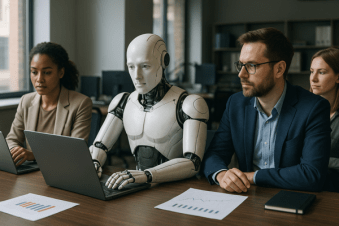
The workplace is evolving. Artificial Intelligence (AI) is no longer a distant concept; it’s now a tangible part of our daily operations. From drafting emails to analyzing complex data sets, AI is becoming an integral member of our teams. This shift towards a “blended workforce”—where humans and AI collaborate—requires us to rethink our roles, responsibilities, and the very fabric of our work culture.
Redefining Roles in the Age of AI
In this new paradigm, AI isn’t just a tool; it’s a collaborator. It handles repetitive tasks, processes vast amounts of data, and even offers insights that can influence decision-making. However, the human touch remains irreplaceable. Creativity, empathy, and ethical judgment are domains where humans excel and AI still lags. The challenge lies in harmonizing these strengths to create a cohesive team.
Organizations like Duolingo and Shopify are pioneering this integration. They’ve adopted AI-first strategies, emphasizing the augmentation of human capabilities rather than replacement. Employees are encouraged to develop AI proficiency, ensuring they can work alongside these digital counterparts effectively.
Navigating Ethical Waters
With great power comes great responsibility. The integration of AI into the workforce brings forth ethical considerations that cannot be ignored. Transparency is paramount. Employees should be aware when they’re interacting with AI and understand how decisions are made. This clarity builds trust and ensures accountability.
Moreover, biases embedded in AI algorithms can perpetuate discrimination if not addressed. Regular audits and diverse data sets are essential to mitigate these risks. Ethical AI implementation isn’t just about compliance; it’s about fostering an inclusive and fair workplace.
Upskilling for the Future
As AI takes on more tasks, the skill sets required for human employees are shifting. Adaptability, critical thinking, and emotional intelligence are becoming increasingly valuable. Training programs must evolve to equip employees with these skills, ensuring they remain relevant and effective in a blended workforce.
Companies are investing in personalized learning paths, leveraging AI to identify skill gaps and tailor training accordingly. This approach not only enhances individual growth but also strengthens the organization’s overall adaptability.
Measuring Success in a Blended Environment
Integrating AI into teams isn’t just about efficiency; it’s about enhancing overall productivity and employee satisfaction. Regular feedback loops, transparent communication, and clear delineation of roles are vital. By continuously assessing the impact of AI on team dynamics, organizations can make informed adjustments, ensuring both human and AI members contribute optimally.
Embracing the Hybrid Future
The blended workforce is not a fleeting trend; it’s the future of work. By thoughtfully integrating AI into our teams, addressing ethical considerations, and investing in continuous learning, we can create a harmonious environment where both humans and AI thrive. It’s not about choosing between man or machine; it’s about leveraging the strengths of both to achieve greater heights.
Support the creation of high-impact content and research. Sponsorship opportunities are available for specific topics, whitepapers, tools, or advisory insights. Learn more or contribute here: Buy Me A Coffee
* AI tools were used as a research assistant for this content, but human moderation and writing are also included. The included images are AI-generated.
 Not Quite Random